


Get the free printer comparison: KDP, IngramSpark, Lulu and Blurb side by side on one sheet.
Table of Contents
- What is Lulu Publishing?
- Is Lulu Publishing Legit?
- How do you self-publish on Lulu?
- What does it cost to publish with Lulu?
- How does Lulu pay you, and how does it compare with KDP?
- Can you sell your books directly through Lulu?
- What is good and bad about Lulu?
- What are the pros of Lulu?
- What are the cons of Lulu?
- Why add a hardcover, and can you reuse your KDP files?
- Lulu says it found an error in my PDF. How do I fix it?
- Is Lulu Publishing Worth It? Honest Review
My Lulu self-publishing review in one line: yes, Lulu is good for what it does. It is a legitimate print-on-demand platform that costs nothing to set up, and I use it as a second place to sell, not my main one. For your main paperbacks I would start with KDP and IngramSpark. Below: what Lulu costs, how it pays you, what the proof copy and distribution rules mean, and the pros and cons from my own use.
| Topic | Lulu |
|---|---|
| Setup cost | Free |
| Distribution fee | One-time, non-refundable $4.99 on your first print or ebook submission to Global Distribution, not charged on revisions (Lulu help, modified 08-Oct-26) |
| Print royalty | In the Lulu Bookstore you keep 80% of the price minus the print cost. Through Global Distribution the retail channel takes 50% of the price first, then the rest after print cost is split 80/20 (Lulu creator revenue guide, modified 30-Oct-26) |
| Ebook royalty | The profit is split 90% to you, 10% to Lulu (same guide) |
| Proof copy | Required for print books before Global Distribution |
| Time to reach retailers | About 12 weeks or longer |
| Retailers named by Lulu | Print books: Amazon and Ingram, which supplies bookstores such as Barnes & Noble. Ebooks: Amazon, Apple, Kobo, Barnes & Noble and others |
What is Lulu Publishing?
Lulu is a print-on-demand self-publishing platform, much like KDP and IngramSpark. You upload your files, Lulu prints each copy when it is ordered, and it can send your book to retailers, sell it in its own bookstore, or sell it on your own website.
Many people go only with Amazon. I think that is risky, because you put all your eggs in one basket, and that is why I use Lulu as well.
I started with Lulu when I was doing hardcover books, before Amazon offered hardcovers. Amazon got me started, but I moved my hardcovers to Lulu quickly once I saw the value of a hardcover edition. Today I recommend KDP and IngramSpark for both paperbacks and hardcovers, and I use Lulu to diversify. KDP hardcovers are not eligible for Expanded Distribution, so they sell only on Amazon (KDP hardcover help), which is why I add IngramSpark. For the print costs side by side, see IngramSpark vs Lulu vs KDP Print.
Is Lulu Publishing Legit?
Yes, Lulu is legitimate. It has been around for years, I have earned money from it myself, and it is open about its costs: its pricing calculator shows printing costs, distribution options and estimated earnings for your book (Lulu pricing). It does not pay advances, so you are paid only on actual sales (Lulu creator revenue guide).
I have listened to Lulu’s people on lots of podcasts and on their YouTube channel. Lulu says the retailer alone decides whether a title gets listed, so paying the distribution fee does not guarantee a listing (Lulu help).
How do you self-publish on Lulu?
You prepare your files, pick your format, upload, order a proof and then publish. The steps:
- Prepare your manuscript: a print-ready PDF for a paperback or hardcover, or an EPUB for an ebook.
- Choose the trim size and binding. Lulu has more sizes and bindings than almost anyone else, but I still recommend 6 by 9 inches because it is the most common format.
- Format the interior and cover. I recommend Atticus for getting the interior right, and my free 12-step checklist shows where formatting fits among the steps I follow for every book I publish.
- Add an ISBN. Global Distribution needs one. With a free Lulu ISBN, Lulu is recorded as the imprint and that cannot be changed, and the ISBN can’t be moved to another publisher. With your own ISBN you can name your own imprint, but not one with Lulu in the name (Lulu help, modified 23-Oct-26). If you want one ISBN per format that you can use on KDP and IngramSpark as well, I can publish your book under my imprint, Urgesta AS. You keep all rights and royalties, and you get the ISBN and barcode within 2 business days: see how it works.
- Order a proof, check it, approve it, then pay the one-time $4.99 distribution fee and submit.
Paperbacks can go to all of Lulu’s channels, though this can vary by trim size. Casewrap and linen wrap hardcovers go only to Ingram. Lulu’s page says Amazon takes none of its hardcovers or books on 80# paper (Lulu help on Amazon, modified 08-Oct-26). That is worth knowing if you want a hardcover on Amazon.
What does it cost to publish with Lulu?
Setting up a book costs nothing on Lulu. You pay for your proof copy and a one-time, non-refundable $4.99 fee when you first send a book to Global Distribution, and nothing for later revisions of that book (Lulu help). Lulu then takes the print cost out of each sale. For the rest, such as editing, a cover design and proof copies, the free self-publishing cost calculator gives a low to high total.
The printing costs are a little higher than on some other sites, in my experience. That is one of the reasons I moved my hardcovers to Amazon for a while, until I saw the downsides there.
For print books going to Global Distribution, Lulu requires you to order a proof copy and approve it before the book is sent out, and it suggests waiting for the proof to arrive before you approve it (Lulu help). If you change the interior or cover file after that, you need a new proof before the new version goes to retailers.
Lulu does not list editing or marketing packages on its pricing page. It points you to a list of partners for editing, design and marketing, and it offers volume discounts on bulk orders if you contact it (Lulu pricing).
The proof copies I ordered cost me about $20 to $30 each, depending on the page count, the colours and shipping, and KDP never asked me for one. Check Lulu’s pricing calculator for what your own book costs today.
I have earned money from Lulu over the years since I started with them, but they are not my top platform. I have earned far more from Amazon and IngramSpark.
How does Lulu pay you, and how does it compare with KDP?
On a print book sold in the Lulu Bookstore, you keep 80% of the price minus the print cost. Through Global Distribution, the retail channel takes 50% of the price first, and the rest after print cost is split 80/20. Your list price also has to be double the print cost or more, Lulu says (Lulu creator revenue guide). Ebooks pay 90% of profit to you.
Lulu’s print costs are higher than KDP’s in my experience, but it gives you more control over price, including by region. If you publish a paperback through Global Distribution, your book can also show up on Amazon, and you cannot pick individual print channels (Lulu help). For a worked example of what one book earns on each, see Lulu vs Amazon KDP. If you are weighing Lulu against Blurb for a photo or art book, I compare those in Lulu vs Blurb.
Can you sell your books directly through Lulu?
Yes. You can sell through Lulu’s own bookstore, and Lulu also offers integrated ecommerce tools to sell your books on your own website (Lulu pricing). The downside is that Lulu’s bookstore is not as well known, so it is harder to drive traffic there than to Amazon, where people already have their card saved and are ready to buy.
If you think you can publish a book and it will just make sales, you are in for a painful lesson. Marketing plays a very big role, and I teach content marketing to the authors I coach. You can pay someone thousands of dollars to market your book, but I recommend you learn that skill yourself.
What is good and bad about Lulu?
Lulu is good for range and control, and weaker on print costs and customer service. It is print-on-demand, so you don’t have piles of books in your garage. It prints and ships each order, and you set the price.
On the criticism side, some authors have had problems with Lulu’s customer service, and I have had some challenges there too. When Lulu moved to its new platform a few years ago, I saw a lot of complaints.
A pricing rule to know: for Global Distribution, your price needs to cover double the print cost. Use Lulu’s pricing calculator before you set a price.
What are the pros of Lulu?
The big pro is flexibility and control. You can control most parts of the publishing process, from size and binding to price per region.
It is also affordable to start. It costs nothing to set up, apart from the proof copy and the one-time $4.99 Global Distribution fee. Lulu says its retail distribution lists books with over 40,000 retailers around the world (Lulu pricing), though each retailer decides whether to carry your title.
What are the cons of Lulu?
The main cons are customer service, print costs and less choice over where your book goes. Lulu is hard to reach by phone, and its answers can take a while. Customer service gets the most complaints from the authors I have talked to.
You cannot pick individual retailers for a print book, so I still recommend also using IngramSpark and Amazon directly. Don’t stick with Lulu alone.
The books cost more to print, so at the same list price your royalty can be lower than on some other platforms. Having to pay for a proof copy has always been a small downside. I have also seen some authors struggle with Lulu’s formatting and cover templates.
Why add a hardcover, and can you reuse your KDP files?
Some readers only buy hardcovers. Some like audiobooks, some paperbacks, some ebooks, and when it is your book against another one they are weighing, they pick the one in the format they want or they don’t buy at all. People in the author groups I belong to told me they were making sales on their hardcovers, so I looked into it, and Lulu was the cheapest print-on-demand route to hardcovers I found. Once the hardcovers were up, I started getting monthly sales from readers who only want that format, and a hardcover next to your paperback, ebook and audiobook adds credibility. I would try it first on your longer books and the ones already selling in other formats.
You can reuse the interior PDF you made for KDP print. I use Atticus for that, so it is correctly formatted before it goes anywhere. The cover is the part that takes more work, because every platform has its own cover template, but once you have done the KDP print cover, Lulu’s needs only a few extra steps.
Lulu says it found an error in my PDF. How do I fix it?
Lulu’s Common Error Messages page lists what to check when an upload fails: pages of different sizes, fonts that are not embedded, and corrupted images. If none of those is the cause, it says to submit a support ticket. For the font step, Lulu has a guide, How Do I Embed Fonts in a PDF?. A PDF made for KDP print can carry a page of a different size, such as a cover page or a landscape page, so check that every page is the trim size, and re-export the PDF instead of patching it.
Is Lulu Publishing Worth It? Honest Review
Yes, as an extra platform, especially for hardcovers and unusual formats. Lulu has more hardcover bindings and sizes than anything else I have used, and you keep control of your publishing rights.
For your main paperbacks and hardcovers, I recommend KDP and IngramSpark. If you are leaving Lulu or looking for more places to sell, see my list of Lulu alternatives. Lulu is worth adding to diversify, starting with the books that already sell well on those platforms.
Have you published with Lulu? How was it? Tell me in the comments, because your experience can show me what I am missing in this review.
To see what a Lulu paperback earns you per sale next to KDP, use my free Lulu vs Blurb vs KDP calculator.
Frequently asked questions
Does Lulu charge to publish a book?
Setting up costs nothing. For Global Distribution of a print book there is a one-time, non-refundable $4.99 fee on your first submission, and revisions of a published book do not carry it. You also pay for a proof copy.
Do I have to buy a proof copy on Lulu?
Yes, for print books going to Global Distribution. Lulu requires you to review and approve a proof before the book is sent to retailers, and a revision needs a new proof.
How long does it take for a Lulu book to appear at retailers?
Lulu says listing can take approximately 12 weeks or longer, because each retailer has its own review schedule. The retailer makes the final decision to accept and list a title.
Does Lulu distribute to Amazon and Barnes & Noble?
Lulu's help pages say Global Distribution sends eligible books to Amazon and Ingram, and Ingram's network includes Barnes & Noble. Amazon takes no Lulu hardcovers, and you cannot choose individual stores, so I also publish on KDP and IngramSpark directly.
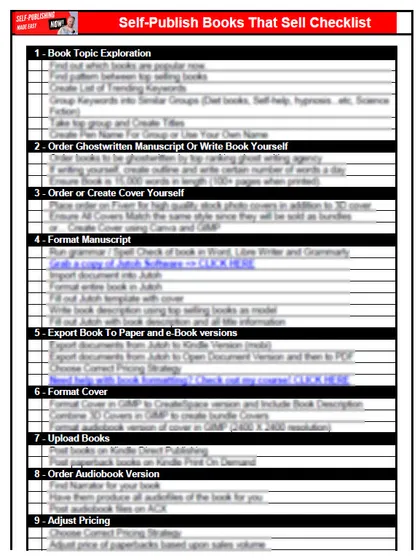
Start with the free checklist
The checklist is the 12 steps I follow for every book I publish, from choosing a topic that already sells to setting up the book's marketing. It is free, and you get it straight away.
You get the free checklist and Chris's emails. Unsubscribe any time. Privacy policy
Not sure yet? Book a free 25-minute call
Newest posts
- IngramSpark Standard vs Premium Color: Which Interior for Your Book?
- Which AI Should You Use to Write and Self-Publish a Book?
- What Can I Do Before My Manuscript Is Finished? Five Jobs to Start Now
- How Should I Title My Book's Chapters?
- Atticus or Reedsy Studio: Which Should You Use to Format Your Book?
Popular guides
- IngramSpark Review 2026: Free Setup, New Fees and Is It Worth It?
- Is Pegasus a Vanity Publisher? (2026 Update)
- Can You Sell Self Published Books On Etsy?
- How To Edit Your Books For Free With Grammarly
- Self Publishing Lulu VS Blurb?
- 5 Best Self Publishing Courses for Beginners (2026)
- How Long Should A Self-Published Book Be
- What Are The Minimum Amount Of Words For Paperback Books?
- Comparing Ingramspark, Lulu, and KDP Print
- How Many Books Do Self Published Authors Sell?
- Self-Publish For Under $199!