


Get the free checklist: the 12 steps I follow for every book I publish.
The main reasons to self-publish on Kindle are that it is free to start, nobody can stop you, the royalties are higher than traditional publishing, and you keep full control and rights. Here are all 12 reasons, from someone who has done it for years. If you want to go from idea to published, take my free 12-step checklist. For a wider list that is not only about Kindle, read the top 10 advantages and benefits of self-publishing.
Who is self-publishing on Kindle for?
After years of self-publishing I have met two types of people who get into it. Some have always wanted to be an author and have a book they want to write or have already written. Others want to make money online with the help of ghostwriters. Kindle works for both. The second group usually learns the rules faster, but that is a different story.
When I started I realised there are winning strategies for what you write about and how you present it. I considered other publishing options before going with Kindle. Looking back, it was the right decision for me and probably for you too.
1. Is it free to self-publish on Kindle?
Yes, mostly. Setting up an account costs nothing, so you can start right away even if you have time but no money. But I would not recommend doing it with no spend at all. Unless you are a graphic designer, you will need someone to make your cover. You will need the right tool to format for KDP, and I recommend Atticus. You may want an editor, and then there is marketing. None of this is required, and there are free ways around all of it.
When I started I had little money and paid for one part of the book at a time. Some months I waited until the next month to afford the cover or editing. I wasted money on things that did not matter, and on formatting that had to be redone. Once the first book was published and selling it was worth it, and I could then afford to publish on ACX.
2. Can you control how fast you move?
Yes. With traditional publishing there are many phases and a lot of waiting. On Kindle you could post the day you finish writing. You could even upload the Word file itself, though I don’t recommend it for quality reasons.
Without an advance or a publisher’s deadline, you decide your own deadlines, and you need a daily goal. When I started I set aside time every day to write 1,000 words. Some authors say the key is BIS, butt in seat. Some days were harder than others, but pressing through the resistance every day worked.
3. Are there gatekeepers on Kindle?
Traditional publishing has gatekeepers whose job is to filter out books. On Kindle, Amazon checks that your formatting is correct and that you aren’t copying other people’s books. It is not judging whether your writing is good enough. That does not mean you should lower the quality. It means you are in charge of how good your books are, and you can pull them off the market and improve them if that helps them sell.
I never had a rejection. The closest was at the beginning, when Amazon had issues with my manuscript and I had to fix it. That was a formatting problem, not a verdict on my writing.
4. Can you get to market first?
Yes. If you have a good idea, you can be first with it. Traditional publishers often want to see others selling on a topic first, because they only want a return on investment.
Sometimes there is a fad and you want a book on it quickly. You have a short window, and you can put a book together fast and publish the ebook right away. I have published books on topics that were in the news, some within a week of the topic getting hot. They did very well because there was little or no competition. With a traditional publisher it would have taken forever.
5. Do you keep control of your project?
Yes, and this is one of the biggest advantages. You keep 100% control. If you want to update the book, update it and republish. In my experience a change takes Amazon about a day to go live.
That matters for books on politics or medicine, where advice changes over time. I underestimated control until I heard the nightmares of people trying to get back rights to books sold through traditional publishers. Watching your book not sell and being unable to do anything about it must be extremely painful. I have never had that.
6. Are the royalties higher on Kindle?
Yes. Many people ask whether self-publishing on Kindle is profitable. It can be. KDP pays a 70% royalty on ebooks priced from $2.99 to $12.99 on Amazon.com. That band was widened from a top of $9.99 on 07-Jul-26, and delivery costs still apply. Outside the band you get the 35% option (KDP royalty options). How much you earn depends on the quality of your book, which includes your cover, description, formatting and reviews.
Traditional publishers pay less. The Authors Guild describes 15% of list price as the standard hardcover royalty and 25% of net receipts as the usual ebook rate, and it argues for 50% on ebooks (Authors Guild). Contracts vary.
You might think Kindle sales undercut your paperbacks. They don’t. Many customers prefer to read on Kindle, and some find the Kindle version first and then buy the paperback. KDP pays a paperback royalty of 50% of the list price on Amazon.com when it is $9.98 or less and 60% at $9.99 or more, minus the printing cost (KDP paperback royalty). My earnings surprised me once I learned sales, marketing and how to produce good books. I reinvested in more books, and I could not publish faster unless I hired ghostwriters. I never put my name on a book I did not write. The royalties build up fast.
7. Can you move to traditional publishing later?
Yes. If your self-published book sells well and brings a following, you can use that to get a traditional publisher to give your book a chance. Self-publishing used to have a bad name, but it is a gateway: you gain experience in writing, publishing and marketing. Publishers don’t want to take a risk on a book that won’t sell. If you can show it is selling, a social media following and an email list, the risk is partly removed. I compare the two side by side in self-publishing vs traditional publishing.
When I started I listened to every self-publishing podcast I could find, and learned that many authors regretted going with a traditional publisher. Their books were locked and they couldn’t fix problems. I knew self-publishing was the right direction for me.
8. Do you own the rights to your books?
Yes. With traditional publishing you often lose rights, so if you want to change the book or sell it on another platform, you need the publisher’s permission. They focus on books that are selling or new, and have little interest in helping with yours.
On Kindle you can change your ebook whenever you want and you own 100% of the rights. You can publish across several platforms without asking anyone. I did Kindle, audiobooks on ACX, paperbacks on CreateSpace (now KDP paperbacks, since CreateSpace closed in 2018) and hardcovers on Lulu. A wider distribution means a bigger audience.
9. Do you control the marketing and distribution?
Yes. You don’t need permission to do a tour or post portions of your book on your website. People think publishers pay for book tours and signings, but they only invest when they are sure a book will earn, so most of their marketing goes to books that would sell anyway.
I want my books in all markets, and I want to control the price and the ads that drive customers to them. You should not leave that to people with no interest in whether your books sell. A community of self-publishers also helps.
10. Will a book improve your CV?
Yes. Publishing on Kindle establishes you as an author and an authority. The second the book is on the market the perception is that you are an author. After more than 50,000 sales of my own books I am not sure there is ever a point where you feel like one. Thousands of books hit the market daily, but “published a book” is still a strong line on a CV or resume.
11. Because you can
Kindle does not guarantee you will become a millionaire, but if you follow best practices your books will sell. I have never met anyone who followed the best strategies and did not earn back their expenses. It also teaches you how online businesses run, and it lets you share your ideas with the world. The feeling of putting my first book on the market was amazing. Right now hundreds of people are reading and listening to ideas that took me years to develop. Just imagine how many would pay to hear what you have to say.
12. Because not all readers like paper
Many people have a preferred way to read and won’t buy a book that is not in their format. Some like audio, some like paper. Kindle books are in high demand, and having no Kindle version just gives money away.
I started with Kindle because it was the easiest way in, before moving to paperbacks, hardcovers and audiobooks. My paperbacks have made me much more money than my Kindle versions, but the Kindle sales taught me not to underestimate them.
What should you do next?
If you want to go from idea to published on Kindle without missing a step, use my free 12-step checklist from the top of this post.
Is there a reason I missed? Tell me in the comments. Is there any advantage to not publishing on Kindle?

Frequently asked questions
Is it free to self-publish on Kindle?
Yes, you can set up an account and publish without paying anything. I still recommend paying for a cover and, if you can, for editing and formatting. See how to write, publish and sell an ebook.
What is the Kindle royalty rate in 2026?
The 70% option applies to ebooks priced from $2.99 to $12.99 on Amazon.com, effective 07-Jul-26, and delivery costs still apply (KDP royalty options). Outside that band you get the 35% option.
Can I edit my ebook after it is published?
Yes. You update the file and republish it, and the new version usually appears within a day. See can you edit your ebook after it is published.
Is self-publishing on Kindle profitable?
It can be, but it depends on your cover, description, formatting and reviews, and nothing guarantees sales. I have not met anyone who followed the best practices and failed to earn back their costs.
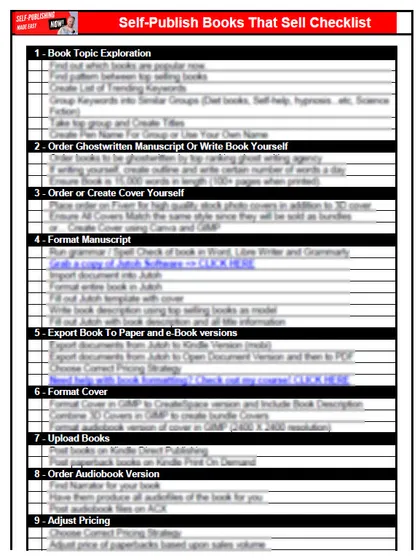
Start with the free checklist
The checklist is the 12 steps I follow for every book I publish, from choosing a topic that already sells to setting up the book's marketing. It is free, and you get it straight away.
You get the free checklist and Chris's emails. Unsubscribe any time. Privacy policy
Not sure yet? Book a free 25-minute call
Newest posts
Popular guides
- Lulu Self-Publishing Review 2026: Pros, Cons and Costs
- IngramSpark Review 2026: Free Setup, New Fees and Is It Worth It?
- Is Pegasus a Vanity Publisher? (2026 Update)
- Can You Sell Self Published Books On Etsy?
- How To Edit Your Books For Free With Grammarly
- Self Publishing Lulu VS Blurb?
- 5 Best Self Publishing Courses for Beginners (2026)
- How Long Should A Self-Published Book Be
- What Are The Minimum Amount Of Words For Paperback Books?
- Comparing Ingramspark, Lulu, and KDP Print
- How Many Books Do Self Published Authors Sell?
- Self-Publish For Under $199!
Tags
- Posts tagged amazon
- Posts tagged amazon kindle
- Posts tagged eBook
- Posts tagged gatekeepers
- Posts tagged Kindle
- Posts tagged Kindle books
- Posts tagged Kindle version
- Posts tagged make money
- Posts tagged marketing
- Posts tagged paperback
- Posts tagged Royalties
- Posts tagged Self Publishing On Kindle
- Posts tagged self-publishing
- Posts tagged traditional publishers
- Posts tagged traditional publishing