

This post contains affiliate links. If you buy through one, Urgesta AS may earn a commission at no extra cost to you. Read the affiliate disclosure.
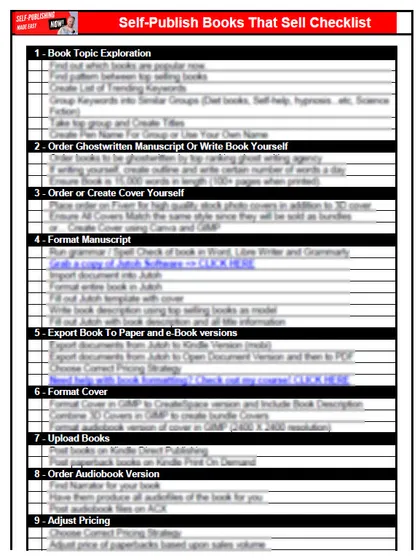
Get the free checklist: the 12 steps I follow for every book I publish.
Can Grammarly edit a book? It can check the spelling and grammar of a whole book, a chapter at a time, but it is not a copyeditor, and here is how I run a manuscript through the free plan. Grammarly is good, and I still use the free version. I run all my books, emails and posts through it. Pro costs $12 a month and adds full-sentence rewrites, plagiarism detection and more AI prompts (Grammarly plans), and I haven’t needed any of them. Below is what the “advanced issues” are, what each plan does, where Grammarly falls short for a whole book, and why a tool that flags everything can make a book worse.
What are Grammarly’s advanced issues?
They are the paid layer of Grammarly’s suggestions, as I read it, but Grammarly does not define the phrase. It is not on the plans page or in the support articles I checked on 13-Nov-26. Grammarly’s own blog says Premium gives “more advanced recommendations” than the free plan (Grammarly blog, updated 17-Jun-22). The plans page shows what that means today: the free plan fixes spelling and grammar and shows your tone, and everything past that is Pro.
Grammarly’s blog says the free plan also includes conciseness suggestions to tighten loose phrasing, a point the plans page does not list. If you found this page by searching the phrase, that is the honest answer: no official list exists, and the table below is the nearest thing.
Free or Pro: what does each plan include?
This is Grammarly’s plans page on 13-Nov-26 (Grammarly plans). The Pro card shows $12 with no billing period and no annual price, and offers a free trial, so check what you will be charged before the trial ends.
| Feature | Free | Pro ($12 a month) |
|---|---|---|
| Spelling and grammar | Yes | Yes |
| See your writing tone | Yes | Yes |
| Adjust your tone | No | Yes |
| Rewrite full sentences | No | Yes |
| Help writing fluently in English | No | Yes |
| Inclusive language suggestions | No | Yes |
| Keep citations consistent | No | Yes |
| Catch accidental plagiarism | No | Yes |
| Detect AI-generated text | No | Yes |
| AI prompts a month | 100 | 2,000 |
| Priority support | No | Yes |
Grammarly’s parent company renamed itself Superhuman in October 2025, but the writing tool is still called Grammarly (Built In).
For a book you wrote yourself, the plagiarism check and citation tools matter little. A research book that quotes other writers is the exception. I looked at the paid version and decided against it. The free one is good enough for what I do, which is catching typos and obvious errors, and I’d rather not have a tool pushing rewrites into my writing.
Can Grammarly check a whole book?
Yes, in pieces. Grammarly limits what the online editor accepts per document, and it also limits how much you can check in a day and in a month, for free and Premium alike (Grammarly support, no page date, checked 13-Nov-26). A long novel can reach the daily cap in one sitting, so plan to spread the chapters over a few days. The exact numbers and my chapter-by-chapter method are in how to edit your books for free with Grammarly.
Where does Grammarly fall short for a book?
It is not a copyeditor. It checks sentences, so it will not tell you that chapter nine contradicts chapter two, that your pacing drags, or that a character’s voice has drifted. If you want the whole manuscript read for those things, my manuscript review names the weak spots and leaves the writing yours. To see which kinds of editing your draft needs, answer the questions in what editing does my book need.
How did Grammarly compare with ProWritingAid and Word?
I started with the spelling and grammar checker in Microsoft Word, and I still run everything through it. Then I tried ProWritingAid and bought the professional subscription. For each book it would report 5,000 or 8,000 grammar and style issues: sentences that were too long, repeated words, passive voice.
Grammarly didn’t do that. It found a lot of issues that were easy to correct and didn’t make me work through thousands of possible changes. I also run my text through LibreOffice Writer, so each book gets checked by more than one tool before it goes out.
How much does ProWritingAid cost?
ProWritingAid is built for fiction and book writers. Its pricing page lists a free plan, Premium at $30 a month or $10 a month billed yearly ($120), and Premium Pro at $36 a month or $12 a month billed yearly ($144). It also sells lifetime plans at $399 and $699. The free plan has grammar, spelling and punctuation checks with daily limits, and Premium adds unlimited line editing reports and 25 or more writing analysis reports (ProWritingAid pricing, October 2026). Monthly plans are not refundable, and yearly and lifetime plans have a 3-day money-back guarantee.
Those 25-plus reports are where the long lists of style issues I mentioned come from. If you want that depth, it is there. I only found it too much for my own books.
My advice: try the free plan of each tool on one chapter and compare how many changes you agree with. Pay for a tool only after you have used the free one for a few books and hit a limit you can name.
Why can a tool that flags everything hurt your book?
Picture getting your book back with 20,000 things to fix. It is overwhelming, and some of the suggestions you won’t even understand. I did this with ProWritingAid on a few books and found that the result didn’t sound any better. It sounded more robotic and less like me.
When I ran the same text through Grammarly’s free version, it smoothed things out and left my voice alone. A checker is there to catch mistakes. Deciding how your book sounds is your job, or your editor’s. If you want a person to do that, read how to hire a professional book editor. Before you pay for any checker, you can paste a chapter into the free book readability score checker to see its reading ease and grade level.
Do you have to tell KDP if you use Grammarly?
No, as long as you wrote the text yourself. KDP asks you to tell it when your book contains AI-generated text, images or translations. It does not ask you to disclose AI-assisted tools, such as fixing spelling and grammar in text you wrote (KDP content guidelines). If a tool writes whole passages for you, that is AI-generated content, and you should disclose it. You are responsible for checking that everything in the book meets KDP’s guidelines.
What is Grammarly Authorship, and do authors need it?
Grammarly Authorship is a feature that records how a document was written, so you can show where the text came from, and in my view most self-publishers don’t need it to publish. It works in Google Docs (with the browser extension) and in Microsoft Word (with the desktop app). As you type, it sorts the text by where it came from, such as typed by you or pasted in. It then makes an Authorship report you can share, plus a replay of your typing and editing. Basic tracking and reports are in every plan, including the free one. The paid plans add attribution for copied and AI text, and AI and plagiarism detection in the report (About Grammarly Authorship).
Why don’t most of us need it? KDP asks you to disclose AI-generated content, and you are not required to disclose AI-assisted content (KDP content guidelines), as “Do you have to tell KDP if you use Grammarly?” above explains. It asks for no proof of how you wrote the book. My advice is to treat Authorship as an optional record: it may help if anyone ever questions whether you wrote the book yourself. A report is not legal proof, and I would not count on KDP or Amazon accepting one.
What happens to the text you run through Grammarly?
Grammarly’s maker, Superhuman, says in its privacy policy (effective 6-Jul-26) that it uses information it collects to train its AI models, and that you can decide whether it uses your user content for that by adjusting the training control in your account settings (Superhuman privacy policy). If your manuscript is unpublished, open that setting before you paste in a whole book, and read the policy yourself, since it can change.
Should you pay for Grammarly?
If you only need spelling and grammar checks, stay on the free plan, as I do. Pay for Pro if you want rewrites or plagiarism checks and you will use them. Either way, use it as one step in your process, not the whole of it. My 12-step checklist covers all the steps I follow for every book, and my guide to how to self-publish your first book walks through them in order.
Do you pay for Grammarly? Tell me in the comments, yes or no, and what made you decide.
Listen to this episode on Spotify
Frequently asked questions
What are Grammarly's advanced issues?
Grammarly's plans and support pages do not define the phrase. Its blog describes Premium as giving more advanced recommendations than the free plan, and the plans page puts tone adjustment, full-sentence rewrites, fluency help, plagiarism and AI-text detection on Pro only.
Is the free version of Grammarly enough for a book?
For most authors, yes. It checks spelling and grammar and shows your tone. Pro adds full-sentence rewrites and plagiarism checks, which most authors writing their own book do not need.
How much is Grammarly Pro?
Grammarly's plans page showed Pro at $12 on 13-Nov-26, with no billing period or annual price on the card. Prices change, so check the page and the charge at checkout before you buy.
How long a document can Grammarly check?
Grammarly's support page says the online editor takes up to 100,000 characters at a time, and any 30-day period allows 300 documents or 150,000 words (50,000 words in 24 hours). Split a book into chapters.
Do I have to tell KDP I used Grammarly?
No. KDP asks you to disclose AI-generated content, but you do not need to disclose AI tools used to edit or error-check text you wrote yourself. If a tool writes whole passages for you, disclose it.
Start with the free checklist
The checklist is the 12 steps I follow for every book I publish, from choosing a topic that already sells to setting up the book's marketing. It is free, and you get it straight away.
You get the free checklist and Chris's emails. Unsubscribe any time. Privacy policy
Not sure yet? Book a free 25-minute call
Newest posts
- IngramSpark Standard vs Premium Color: Which Interior for Your Book?
- Which AI Should You Use to Write and Self-Publish a Book?
- What Can I Do Before My Manuscript Is Finished? Five Jobs to Start Now
- How Should I Title My Book's Chapters?
- Atticus or Reedsy Studio: Which Should You Use to Format Your Book?
Popular guides
- Lulu Self-Publishing Review 2026: Pros, Cons and Costs
- IngramSpark Review 2026: Free Setup, New Fees and Is It Worth It?
- Is Pegasus a Vanity Publisher? (2026 Update)
- Can You Sell Self Published Books On Etsy?
- How To Edit Your Books For Free With Grammarly
- Self Publishing Lulu VS Blurb?
- 5 Best Self Publishing Courses for Beginners (2026)
- How Long Should A Self-Published Book Be
- What Are The Minimum Amount Of Words For Paperback Books?
- Comparing Ingramspark, Lulu, and KDP Print
- How Many Books Do Self Published Authors Sell?
- Self-Publish For Under $199!