


Get the free checklist: the 12 steps I follow for every book I publish.
I self-publish my ebooks on Kindle, my paperbacks on KDP Print and IngramSpark, my best-selling hardbacks on Lulu and my audiobooks on ACX. If I had to pick one platform for profit after Kindle, it would be IngramSpark for print books, because my daily sales there beat everywhere else. I also make sure my income never comes from one platform: any single site can change its royalty rates, freeze your account or stop self-publishing, and I have seen it happen to others. Below: the order I use, why I chose each company, what each costs, and how I do audio.
Where should I self-publish to make the most profit?
Talk to successful self-publishers who currently publish across several platforms, and look for the networks that make you the most money. Unless you simply want maximum distribution, you should not put your book on just any network. Here is the order I use, and it follows how the platforms flow out of each other.
What order do I publish in?
- Kindle ebook first. If you don’t have a book on the market, this is where you start. I get it out before anything else. Use Atticus for formatting so the file is high quality.
- Paperback: KDP Print, then IngramSpark. For IngramSpark, US authors can take a free ISBN that IngramSpark owns and that can’t be moved, or use their own (IngramSpark FAQ). Its 2026 rate card lists title set-up as free and a global distribution fee of 1.875% of the local list price (IngramSpark rate card, effective 01-Feb-26). You can do both ebook and paperback there.
- Ebooks in other stores: Draft2Digital. It took over Smashwords and needs an EPUB. It distributes your ebook to Apple Books, Barnes & Noble, Kobo, the Smashwords store, libraries and more. Its FAQ lists a one-time $20 activation fee for new accounts, a $12 yearly fee for accounts earning under $100 a year, and about 10% of each sale (Draft2Digital FAQ). In my experience it makes far fewer sales than Kindle. Kobo Writing Life is another ebook store you might also try; check its current royalty rules before you decide.
- Hardbacks on Lulu. I use it only for my best sellers, and I put the best sellers out first. Amazon KDP offers hardcovers now too, but I like to spread things out. The covers are a little trickier, but worth the effort. Lulu gives a free ISBN once you buy and approve a proof copy, and the imprint is listed as Lulu, so Lulu keeps that ISBN. For global distribution it charges a one-time $4.99 distribution review fee on your first submission (Lulu help). The proof copy itself costs the printing price of a book, which depends on size and pages, so check its calculator.
- Audiobooks on ACX. In my experience you can only do the audiobook once you have a Kindle or print edition of the book on Amazon.
Kindle, KDP Print and ACX hang together, since they all go through Amazon, share a large audience and together make more profit than apart. The full comparison of the print options is in Comparing IngramSpark, Lulu and KDP Print.
Why did I start with Amazon, and why didn’t I stay exclusive?
Amazon is the easy pick and the best place to start. Here at Self-Publishing Made Easy Now the goal is to keep things easy, and trying to do everything in a day is a way to crash and burn. KDP is free, you don’t pay for an ISBN, and you don’t pay for a proof copy because it shows you a digital preview. It also has a large audience of buyers with their credit cards out.
When I started I thought Amazon should be enough, with paperbacks, Kindle ebooks and audiobooks through ACX. But Amazon rewards exclusivity. KDP Select is a free 90-day program for Kindle ebooks that makes them eligible for Free Book Promotions and Kindle Countdown Deals. The page says you have three days from the start of an enrollment period to cancel; after that you need to contact KDP. It also says ACX audiobook enrollment in KDP Select adds no extra KDP exclusivity requirements to your title.
Was staying exclusive the right choice for me? No. I started a trickle of books on other platforms, and sales went up over time as I added more books. Today IngramSpark outperforms Amazon per book for me, for the books I put there. My reasons for staying out of Select are mine, so read the terms on the page before you enroll.
How do I do audiobooks on ACX?
I thought audiobooks were very hard until other authors told me how much they made from audio alone. On ACX you can post your book, and narrators audition for the right to narrate it. You pick one, give them a deadline, and they upload the audio files to ACX, where they go through quality checks. If they pass, the book goes on sale.
You pay the narrator in one of two ways (ACX: how royalties work):
- Royalty share. You pay nothing up front and split the rights holder’s royalty equally with the narrator (in the old model 20% each of the 40%). ACX requires exclusive distribution for this deal, and the narrator earns for seven years.
- Pay for production. You pay a one-time fee and keep the whole rights holder royalty. I found narrators on Upwork at much better rates than the split would cost me.
The flat fee is also useful for bundles: you can pay only for the opening and ending of a bundle instead of paying for a whole new file, whereas with a split the narrator would earn on the whole bundle.
ACX’s posting agreement runs for seven years from delivery of the finished audiobook and then renews yearly unless either side gives notice (ACX Book Posting Agreement). Rates are changing too: under Audible’s new model, the rights holder gets 50% for exclusive distribution and 30% for non-exclusive, up from 40% and 25%. New users have been on the new model since 26-May-26, existing titles can opt in, and ACX says the old model ends by the end of the year (Audible’s new royalty model, 31-Jul-26). The sign-up bounties that used to be ACX’s main profit source are gone, but sales still come in daily. See How To Get Your Audiobooks Produced On ACX for the steps.
Why IngramSpark for print?
Print books through IngramSpark were by far my most profitable channel when I looked at daily sales. If making money is your goal, consider it. Hardback and paperback distribution through IngramSpark also reaches bookstores and libraries beyond Amazon. It doesn’t take many months to earn back the costs, assuming you have a quality book. I only put my best books on IngramSpark, and I have learned that from many failures: high quality, low quality and everything between.
The cost to remember is the ISBN if you want your own. Where I live in Norway, and in Canada, ISBNs are free. In the United States, IngramSpark now gives free ISBNs to US self-publishers. The catch is that the imprint is IngramSpark’s Indy Pub, the ISBN can only be used on IngramSpark, and you can’t transfer it. If you want an ISBN you own, or you are outside the US, you need your own.
What can go wrong if you rely on one platform?
Three things. They can change royalty rates, they can ban you, and they can stop doing self-publishing or go out of business. Every one of these sites has the right to change its rates and to close an account at any time. I have seen people get their Amazon accounts frozen, and ACX authors accused of misusing promo codes. Some of them did not realize they had done anything against the terms of service. You don’t want to be on a single site. Revenue from multiple places is what keeps your business from going underwater if one changes the rules. I weigh up the extra setup and paperwork in the pros and cons of publishing on all platforms. For the mistakes that cost me money, see the three mistakes that cost me nearly $3K.
To check you haven’t missed a step before you publish anywhere, grab the free 12-step checklist.
Listen to this episode on Spotify
Listen to the follow-up episode on Spotify
Frequently asked questions
Where should I self-publish to make the most profit?
I publish a Kindle ebook first. After Kindle, print books on IngramSpark were my most profitable channel, because my daily sales there beat everywhere else.
In what order do you publish a book?
Kindle ebook first, then the paperback on KDP Print and IngramSpark, ebooks in other stores on Draft2Digital, hardbacks on Lulu for best sellers, and the audiobook on ACX.
How do you pay an audiobook narrator on ACX?
With royalty share you pay nothing up front and split the rights holder's royalty equally with the narrator. With pay for production you pay a one-time fee and keep the whole royalty.
What does ACX pay under the new royalty model?
The rights holder gets 50% for exclusive distribution and 30% for non-exclusive, up from 40% and 25%. ACX says the old model ends by the end of 2026.
Do I need to buy an ISBN for IngramSpark?
Not necessarily. US authors can take a free ISBN that IngramSpark owns and that can't be moved, or use their own. In Norway and Canada ISBNs are free.
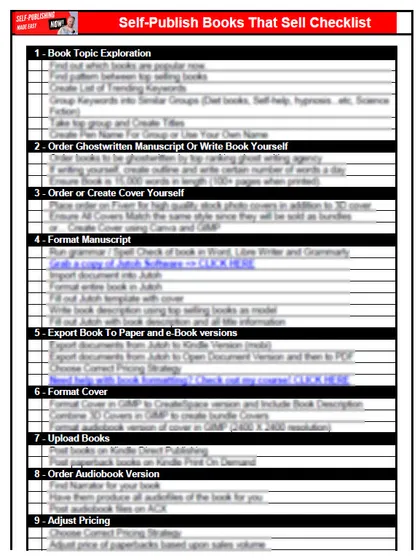
Start with the free checklist
The checklist is the 12 steps I follow for every book I publish, from choosing a topic that already sells to setting up the book's marketing. It is free, and you get it straight away.
You get the free checklist and Chris's emails. Unsubscribe any time. Privacy policy
Not sure yet? Book a free 25-minute call
Newest posts
Popular guides
- Lulu Self-Publishing Review 2026: Pros, Cons and Costs
- IngramSpark Review 2026: Free Setup, New Fees and Is It Worth It?
- Is Pegasus a Vanity Publisher? (2026 Update)
- Can You Sell Self Published Books On Etsy?
- How To Edit Your Books For Free With Grammarly
- Self Publishing Lulu VS Blurb?
- 5 Best Self Publishing Courses for Beginners (2026)
- How Long Should A Self-Published Book Be
- What Are The Minimum Amount Of Words For Paperback Books?
- Comparing Ingramspark, Lulu, and KDP Print
- How Many Books Do Self Published Authors Sell?
- Self-Publish For Under $199!
Tags
- Posts tagged ACX
- Posts tagged ACX Audible
- Posts tagged amazon
- Posts tagged audiobooks
- Posts tagged eBook
- Posts tagged Ingram spark
- Posts tagged ISBN
- Posts tagged Kindle
- Posts tagged Lulu
- Posts tagged market
- Posts tagged platforms
- Posts tagged self-publishing
- Posts tagged Where I Self-Publish My Books
- Posts tagged Where I Self-Publish My Books and Why I Chose These Companies