


This post contains affiliate links. If you buy through one, Urgesta AS may earn a commission at no extra cost to you. Read the affiliate disclosure.
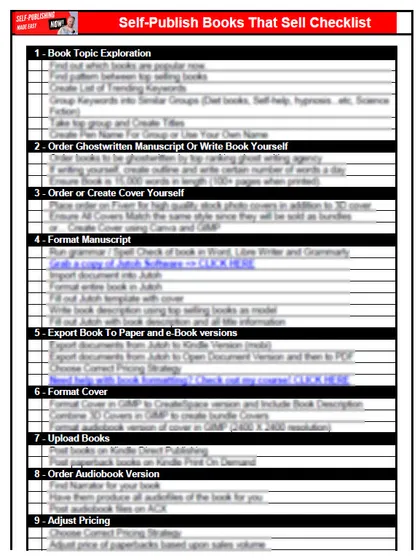
Get the free checklist: the 12 steps I follow for every book I publish.
A winning topic for your first ebook is one that solves a reader’s problem in a market where many books sell and few books exist. I only publish when the ratio of books on a topic to books selling well is 20 or less, and a tool like KDSPY works that out for you. Below is how I do it, step by step.
Why not just write about what I find interesting?
Because publishing any book does not mean it will sell. That is a complete mistake. You need the right kind of book in the right market.
When I started, I wrote about what interested me: goal achievement and habit development. I had no idea whether those were winning topics. They did sell thousands of copies, but I was not playing the right strategy for getting them to sell. It was only years later, after reading books, following YouTube channels and listening to podcasts, that I understood you need more than interest. You need data. For the story of what I changed, see what I would do if I had to start over.
Should I write fiction or nonfiction?
For a first book I would choose nonfiction. Top fiction bestsellers can make more money, but it is a lot harder to get found. With nonfiction, people have a problem and are searching for the answer: puppy training, golf tips, cryptocurrency, a hobby. They care less about who wrote the book and more about whether it solves their problem. If you write short fiction, see where a new writer can publish short fiction.
What is the ratio that decides a topic?
Here is the method I use. It takes about five minutes in KDSPY or Publisher Rocket.
Affiliate link: I earn a small commission if you buy, at no cost to you.
- Search your topic, for example “puppy training”, and look at the top 20 books.
- Count how many of those 20 have a sales rank under 100,000. Those are selling regularly. Say the answer is 10.
- Find out how many books exist on that topic in total. Say it is 100.
- Divide the total by the number selling well: 100 divided by 10 gives a ratio of 10.
I do not publish unless the ratio is 20 or less. It still leaves a wide range of topics. A low ratio means readers are buying lots of books on the topic and there are not many to choose from, so you serve an underserved market.
Amazon does not publish exact sales numbers (Kindlepreneur), so a rank under 100,000 is a rough sign, not a count. In my experience it means about a sale a day. Use it as a guide.
How many categories can my ebook go in?
KDP lets you choose three categories when you set up a book, and says they must match your content: Amazon does not tolerate categorization that misleads readers. A category change can take up to 72 hours to show (KDP categories help). So when you check the top 20 for a topic, look at the categories you could honestly pick for your book, not only one.
Why should I check the ranks more than once?
A rank is a snapshot. Kindlepreneur’s sales rank calculator page says ranks are relative to other books in the same format and marketplace, so the sales needed for a given rank change from day to day. It says they update often hourly, or several times a day. Purchases move the rank most. It also says Kindle Unlimited downloads count at about 0.7 of a sale, which is the site author’s own data, not Amazon’s.
Two things follow from that, and both are my advice. Look at your top 20 on a few different days before you trust the count of books under 100,000. And compare Kindle books with Kindle books, because a good rank depends on the category and format.
If the ratio only passes on one lucky day, I would keep looking. A topic that passes on most days, in the same format, is the one worth writing. It costs you a few extra minutes now and can save you months on a book nobody wanted.
Once you have a topic, the next step is keywords. See how to use keywords on Amazon KDP and the best self-publishing niches.
Choosing the topic is the first step in my free 12-step self-publishing checklist, and the other steps follow in order once you have one.
Listen to this episode on Spotify
Frequently asked questions
What is a winning topic for a first ebook?
One that solves a reader's problem in a market where many books sell and few books exist. The author only publishes when the ratio of books on a topic to books selling well is 20 or less.
How do you work out the ratio?
Search your topic and look at the top 20 books, count how many have a sales rank under 100,000, then divide the total number of books on the topic by that count. 100 books and 10 selling well gives a ratio of 10.
Should a first book be fiction or nonfiction?
The author would choose nonfiction. People have a problem and search for the answer, and they care less about who wrote the book.
Why check the sales ranks more than once?
A rank is a snapshot and changes from day to day, so look at the top 20 on a few different days before you trust the count.
How many categories can I pick for my ebook?
Three. KDP says they must match your book's content, and a change can take up to 72 hours to show (KDP categories help).
Start with the free checklist
The checklist is the 12 steps I follow for every book I publish, from choosing a topic that already sells to setting up the book's marketing. It is free, and you get it straight away.
You get the free checklist and Chris's emails. Unsubscribe any time. Privacy policy
Not sure yet? Book a free 25-minute call
Newest posts
- IngramSpark Standard vs Premium Color: Which Interior for Your Book?
- Which AI Should You Use to Write and Self-Publish a Book?
- What Can I Do Before My Manuscript Is Finished? Five Jobs to Start Now
- How Should I Title My Book's Chapters?
- Atticus or Reedsy Studio: Which Should You Use to Format Your Book?
Popular guides
- Lulu Self-Publishing Review 2026: Pros, Cons and Costs
- IngramSpark Review 2026: Free Setup, New Fees and Is It Worth It?
- Is Pegasus a Vanity Publisher? (2026 Update)
- Can You Sell Self Published Books On Etsy?
- How To Edit Your Books For Free With Grammarly
- Self Publishing Lulu VS Blurb?
- 5 Best Self Publishing Courses for Beginners (2026)
- How Long Should A Self-Published Book Be
- What Are The Minimum Amount Of Words For Paperback Books?
- Comparing Ingramspark, Lulu, and KDP Print
- How Many Books Do Self Published Authors Sell?
- Self-Publish For Under $199!