
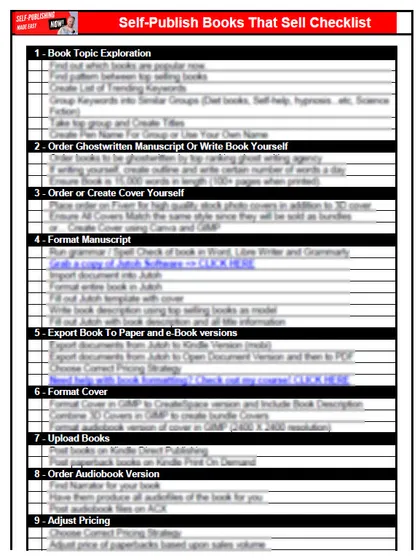
Get the free checklist: the 12 steps I follow for every book I publish.
Amazon KDP is still the best self-publishing platform to start with, because Amazon’s readers already have their cards on file and buy in one click. Then add other platforms for print, hardcovers, wider ebook distribution and audio, so you don’t depend on one account. Below is what I use for each format.
| Format | Where I publish |
|---|---|
| Kindle ebook and paperback | Amazon KDP |
| Hardcover | KDP and IngramSpark (Lulu only to diversify) |
| Ebooks in other stores | A distributor such as Draft2Digital, or Kobo directly |
| Audiobook | ACX (US, UK, Canada, Ireland) or Voices by INaudio and Spotify for Authors |
Which platform should you start with?
Start with KDP. What was great five years ago can be useless today, and if you choose the wrong platforms your sales will be small and you will lose motivation. If you are just starting, my free checklist gives you the 12 steps in order, and my longer comparison of the best self-publishing platforms goes through each one.
When I started writing books in 2015, I went with Amazon Kindle Direct Publishing because I wanted a Kindle book. I saw the advantage straight away: no pile of printed books in the garage that nobody buys. There is no limit to how many ebooks you can sell. Print on demand works the same way: the book is printed only when someone orders it, and Amazon or the other printer mails it to the reader.
In 2015 KDP was the easy answer, and then you added print and audiobooks. I have experimented with other platforms since, and KDP is still the clear winner. So many people have their credit cards registered with Amazon. When they want a book, they don’t go to Google. They go straight to Amazon, ready to buy.
Why not be selective at the start?
Because the sales are on Amazon. A reader searches, finds a Kindle book that often costs between $3 and $10, clicks buy, and the purchase is done in one click. It is so simple that it is hard to ignore.
Some people want to avoid Amazon because of its size. I understand that, but if you want to make a living from books, you need them to sell as many copies as possible to as big an audience as you can. So I don’t ask which companies I like; I ask where I get the biggest return. Once your books are selling well, you can be selective and pick a smaller company or a local bookstore. Until then, I wouldn’t worry about it. Self-published books do reach the top; read can self-published books become bestsellers.
You need both sides: the art (your creativity) and the business of getting the book in front of buyers. Put them together and you make the most from the books you have.
The second format is hardcover. I once used Lulu for these. These days I recommend KDP and IngramSpark, and I only use Lulu to diversify. KDP’s hardcovers are case laminate with no dust jacket, and they do not go through Expanded Distribution, so IngramSpark is the one for wider reach. Some readers only buy hardcovers. If your book isn’t in hardcover, they won’t buy it, even if it is the best book on the subject.
For ebooks outside Amazon, a distributor like Draft2Digital sends your EPUB to many stores and libraries from one account. Apple Books and Kobo are two of the biggest other ebook stores, and Kobo also has its own author portal, Kobo Writing Life. Google Play Books is another option, and Google says partners who accept its updated terms get 70% in 60+ countries at any price (Google). It has not always let new publishers sign up, so check whether it is open to you. IngramSpark gives your paperback wider distribution to bookstores and libraries. Type in your own ebook price and the ebook royalty calculator shows what each of these stores would pay you. For costs and royalties side by side, see the best self-publishing companies.
For audiobooks I use ACX, which sells through Audible, Amazon and Apple Books. ACX is open to residents of the US, UK, Canada and Ireland (ACX help). Elsewhere, or for other stores and libraries, look at Voices by INaudio (previously Findaway Voices), which distributes to retail and library stores, and Spotify for Authors, which handles audiobooks on Spotify (Spotify support).
KDP now handles Kindle ebooks, paperbacks and hardcovers in one account, and paperbacks can also go to other stores through Expanded Distribution (at a 40% royalty). Amazon’s rules have changed a lot since I made this video in 2020: ads no longer require KDP Select, KDP asks you to tell it if your book includes AI-generated content, and it limits how many new titles you can create in a set period (recent reports say two per format per week since 21-Sep-26, so check KDP’s current rule).
Which formatting tool do I use for all platforms?
Most of my money comes from paperbacks, but you start with KDP, and for ACX your book has to be on Amazon first. To get every format out, you need the right formatting tool. I used Jutoh for my books for years. Today I recommend Atticus. One click gives you the EPUB, another gives you the print PDF for your paperback, and the same file works for the other stores. I tried Scrivener once and had a lot of trouble with it, especially the table of contents.
So which platform is best? KDP to start, but you will lose money in the long run if you stay on only one platform. You need them all.
One thing to watch: if you put your Kindle ebook in KDP Select, it must stay exclusive to Amazon while enrolled, so you can’t put that ebook on Kobo or Apple Books at the same time. Decide which route you want for each book.
Run your books through every platform you can, in every format readers want. I am sometimes amazed to see my books in libraries around the world. Library readers don’t pay you directly, but if your book has a freebie inside that readers get in exchange for their email address, every library reader can join your list too.
Do you disagree with me? I have made plenty of mistakes over the years, and I will change my mind if you convince me. Tell me in the comments.
Listen to this episode on Spotify
Frequently asked questions
What is the best self-publishing platform for beginners?
Amazon KDP. Readers already have their cards on file, a Kindle book is cheap and bought in one click, and you can add paperbacks and hardcovers in the same account.
Should I use more than one self-publishing platform?
Yes. Sticking to one platform loses money in the long run. Add IngramSpark for wider print distribution, a distributor like Draft2Digital for ebook stores, and an audio route for audiobooks.
Where can I publish an audiobook?
ACX, if you live in the US, UK, Canada or Ireland. It sells through Audible, Amazon and Apple Books. Elsewhere, look at Spotify for Authors for Spotify and Voices by INaudio (formerly Findaway Voices) for other stores and libraries.
Can I sell my Kindle ebook on Kobo and Apple Books too?
Only if it is not in KDP Select. Select keeps the ebook exclusive to Amazon while enrolled.
Start with the free checklist
The checklist is the 12 steps I follow for every book I publish, from choosing a topic that already sells to setting up the book's marketing. It is free, and you get it straight away.
You get the free checklist and Chris's emails. Unsubscribe any time. Privacy policy
Not sure yet? Book a free 25-minute call
Newest posts
- IngramSpark Standard vs Premium Color: Which Interior for Your Book?
- Which AI Should You Use to Write and Self-Publish a Book?
- What Can I Do Before My Manuscript Is Finished? Five Jobs to Start Now
- How Should I Title My Book's Chapters?
- Atticus or Reedsy Studio: Which Should You Use to Format Your Book?
Popular guides
- Lulu Self-Publishing Review 2026: Pros, Cons and Costs
- IngramSpark Review 2026: Free Setup, New Fees and Is It Worth It?
- Is Pegasus a Vanity Publisher? (2026 Update)
- Can You Sell Self Published Books On Etsy?
- How To Edit Your Books For Free With Grammarly
- Self Publishing Lulu VS Blurb?
- 5 Best Self Publishing Courses for Beginners (2026)
- How Long Should A Self-Published Book Be
- What Are The Minimum Amount Of Words For Paperback Books?
- Comparing Ingramspark, Lulu, and KDP Print
- How Many Books Do Self Published Authors Sell?
- Self-Publish For Under $199!