

Get the free checklist: the 12 steps I follow for every book I publish.
No, as an author you generally don’t work for a company, and the big advantage of being an author is that you work for yourself. About 65% of writers and authors in the US are self-employed, the largest share of any group (US Bureau of Labor Statistics). I started with one Kindle book and no publishing house, and I have worked for myself since. The rest of this post covers the exceptions, the legal setup and what you earn.
Do authors work for a company?
Usually not. When I started publishing, I had just a book, with no publishing house and nobody in contact with me. I began with my first Kindle book, and since then there have been 230 books. I was not even a company at that point, just one person.
If you wonder whether the internet has changed how many people write, see are there more writers now because of the internet.
When does a writer work for a company?
A freelancer on a site like Upwork is working for themselves, but companies also hire writers as employees. Copywriters, social media writers and technical writers can be hired full-time to write a company’s sales, marketing and core content. Professional and technical services firms and information companies are the next largest groups of employers in the BLS figures, at about 9% and 8% of jobs.
A traditional publisher does not employ you either. You are paid to write a book that the publisher puts out and sells, and they pay you royalties on those sales. If you want a publishing house to notice you, read the best way to get a publishing house’s attention.
Do I need a company to publish my own books?
No, but you may want one later. As the money started to come in, the revenue made taxes difficult to handle, and I needed a company.
Some people use a C-corporation or a limited liability company. In Norway, the equivalent is an aksjeselskap, or AS, a limited liability company. Mine is Urgesta AS. It keeps your personal money and your book money apart, which makes bookkeeping easier, and it can protect you legally. Rules and taxes differ by country, so speak to an accountant or lawyer before you choose.
If your book quotes copyrighted material, such as song transcriptions, read the legal steps to publish a book about music.
How are authors paid if they don’t have an employer?
Through royalties, a share of each sale. They vary by contract. The Authors Guild’s model contract sets out typical traditional terms (Model Trade Book Contract, section 5):
| Format | Typical royalty |
|---|---|
| Hardcover | 10% of retail price on the first 5,000 copies, 12.5% on the next 5,000, 15% after that |
| Trade paperback | 7.5% of retail price |
| Ebook | 25% of the publisher’s net receipts |
Self-publishing pays more per copy. On Amazon.com, Kindle ebooks priced from $2.99 to $12.99 earn a 70% royalty before delivery costs, as of 7-Jul-26, and the 35% option covers other prices (KDP pricing page). Delivery costs average about $0.06 per unit and vary by file size (KDP royalty options).
How are self-employed authors taxed in the US?
If you sell your own books as a sole proprietor, the IRS treats you as self-employed. You report the income or loss on Schedule C of Form 1040, pay Social Security and Medicare tax through Schedule SE, and generally pay estimated taxes quarterly (Form 1040-ES) as well as filing an annual return (IRS, Self-Employed Individuals Tax Center, reviewed 27-Sep-26). Other countries have their own rules, so ask an accountant where you live.
What do writers and authors earn in the US?
The Bureau of Labor Statistics put the median pay for writers and authors at $76,910 a year in May 2025, with 140,300 jobs in 2025. It projects no change in employment from 2025 to 2035, about 11,900 openings a year, and says the typical entry-level education is a bachelor’s degree (US Bureau of Labor Statistics, page last modified 29-Oct-26).
Read that number with care. It covers people paid to write as a job, such as copywriters, technical writers and freelancers, so it says little about what one self-published book will earn. Book income swings widely, and most first books earn very little. Treat the BLS figure as a picture of writing as a profession, not a forecast for your Kindle book.
The same page says writers can work anywhere they have a computer, that some work part time, and that many keep regular office hours or set their own. Some work evenings and weekends to meet deadlines. Employees have deadlines from a boss. Self-employed authors have deadlines they set themselves, and the second kind is easier to miss.
What is the best part of not having a boss?
Nobody tells you what to write, when to put out your content, how much you can earn or how many books you can write. You decide when you work in the day.
If you have a laptop, you can just write. Many self-publishing authors even speak into a microphone and have it transcribed into a book. I like to write on the keyboard to a set number of words a day, which gets me through several books. That freedom is one of the main advantages of going the self-publishing route.
For what matters most once you publish, see the most important factors for ebook publishing.
So what have you found? Do you work for a company or for yourself, and do you prefer it? If you would like to get your first book out, my free 12-step self-publishing checklist gives you the steps in order.
Listen to this episode on Spotify
Frequently asked questions
Is an author an employee of the publisher?
No. A traditionally published author is a contractor who licenses the book and is paid royalties on sales, usually after an advance. The publisher is not the author's employer.
Do I need a company to self-publish?
No. I published my first Kindle books with no company at all. I set up a limited company later, when the income made taxes and bookkeeping harder, and I suggest talking to an accountant or lawyer about what fits your country.
Can an author have a boss?
Yes, if you write as a job. Companies hire full-time writers, such as technical writers, copywriters and social media writers, and those writers are employees. That is different from writing and selling your own books.
Do self-employed authors pay estimated taxes?
In the US, the IRS says self-employed people generally file an annual return and pay estimated taxes quarterly using Form 1040-ES. Rules differ by country, so check with an accountant.
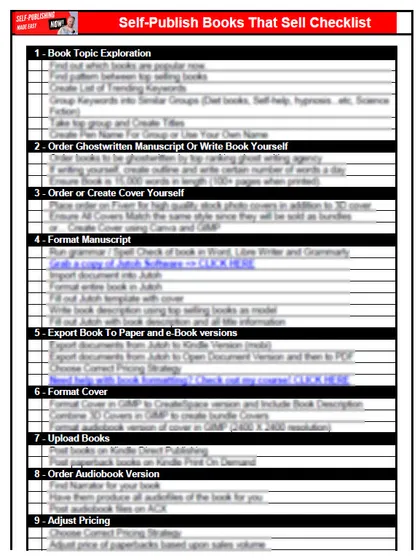
Start with the free checklist
The checklist is the 12 steps I follow for every book I publish, from choosing a topic that already sells to setting up the book's marketing. It is free, and you get it straight away.
You get the free checklist and Chris's emails. Unsubscribe any time. Privacy policy
Not sure yet? Book a free 25-minute call
Newest posts
Popular guides
- Lulu Self-Publishing Review 2026: Pros, Cons and Costs
- IngramSpark Review 2026: Free Setup, New Fees and Is It Worth It?
- Is Pegasus a Vanity Publisher? (2026 Update)
- Can You Sell Self Published Books On Etsy?
- How To Edit Your Books For Free With Grammarly
- Self Publishing Lulu VS Blurb?
- 5 Best Self Publishing Courses for Beginners (2026)
- How Long Should A Self-Published Book Be
- What Are The Minimum Amount Of Words For Paperback Books?
- Comparing Ingramspark, Lulu, and KDP Print
- How Many Books Do Self Published Authors Sell?
- Self-Publish For Under $199!