

This post contains affiliate links. If you buy through one, Urgesta AS may earn a commission at no extra cost to you. Read the affiliate disclosure.
Get the free checklist: the 12 steps I follow for every book I publish.
Fiction earns more at the top, but nonfiction is easier to sell, and no survey gives one income figure for fiction against nonfiction. If you are not sure which way to go, I recommend nonfiction: people search for the answer to a problem and don’t care who wrote the book, while fiction readers are hard to find unless you write in a hot genre. Whichever you choose, my book sales calculator shows the sales your income goal needs, with a separate price for the ebook and the paperback. Below: what the 2025 numbers say, how the royalty and Kindle Unlimited work for both, why I chose nonfiction, and how to decide.
Which earns more, fiction or nonfiction?
Fiction has the higher ceiling. The 2025 Written Word Media survey of 1,346 indie authors says romance authors are roughly twice as common in the top earning tiers as you would expect. Romance is the primary genre of about 21% of respondents, but about 44% of those earning over $10,000 a month. Cozy mystery and paranormal romance also do well. Children’s books and literary fiction sit mostly in the lowest bracket (Written Word Media 2025 Indie Author Survey, 02-Dec-25).
The Authors Guild’s last income survey points the same way. Full-time romance authors had the highest median book income in 2022, $31,725, against $3,500 for biography authors (Authors Guild 2023 Author Income Survey, 27-Sep-23).
The same survey shows most authors earn little: 44% make $100 a month or less and 13% make over $5,000. General nonfiction is only 6% of respondents and rare among high earners. Written Word Media notes that nonfiction authors often earn through speaking, consulting and courses, so book income alone can sit lower. It does not give one fiction versus nonfiction income figure, so I will not either.
| Topic | Fiction | Nonfiction |
|---|---|---|
| How readers find you | Genre, series, author name | A search for the answer to a problem |
| Top earners | Mostly romance and similar genres | Rare from book sales alone |
| Predictability | Lower | Higher |
| Extra income | Usually books only | Coaching, consulting, services |
What does it take to earn from fiction?
Books, and a lot of them. The survey says authors earning $1,000 a month or more often have ten or more books and a series. Authors with 25 or more books have a median income of about $3,000 a month, and over 40% of them earn $5,000 or more. Authors with five to nine books have a median of about $50.
Where does Kindle Unlimited fit in?
For fiction it matters a lot. KDP Select asks you to make the digital format of a book available exclusively through KDP, and print is not affected. In return, KDP says you earn your share of the KDP Select Global Fund when subscribers read your books, and you get promotion tools such as Kindle Countdown Deals and free book promotions (KDP Select). That page now calls the reader subscription Kindle+, the program most authors still call Kindle Unlimited. It does not give a rate per page, so I won’t either.
In the survey, 43% of authors earning over $5,000 a month have all their books in Select, against 15% who are fully wide. Across all respondents it is 38% all in Select and 30% none in Select. This is what the respondents report, and it does not prove Select earns more. Binge readers of a long series suit the page-read model well, which is one reason fiction authors with many books use it. Nonfiction readers tend to read one book on a problem and move on, so Select does less for most nonfiction.
The top earners also stack their marketing. The survey says the group earning over $10,000 a month spends about $4,500 a month on it and usually combines an email list, promo sites, Facebook ads and a series. Authors who rely only on the retailers’ own traffic are rare at that level. Spending rises with each income bracket, but the survey itself warns that correlation is not causation (Written Word Media).
How does the royalty differ on a Kindle book?
It does not depend on fiction or nonfiction. KDP offers 35% or 70% on ebooks, and you can work out your own numbers in my KDP royalty and print cost calculator. The 70% option applies to in-copyright books sold in eligible territories, minus an average delivery cost of $0.06 per unit that varies with file size, and public domain works only get 35% (KDP royalty options). My advice: pick on how readers will find the book, not on royalty rules.
Why did I choose nonfiction?
I already had nonfiction ideas when I started my PowerLists books, and I was thinking about lists and efficiency. It was an easy choice. I had no story I wanted to write. After taking courses, watching videos and listening to podcasts, the answer became visible. If you are choosing your first topic, see a winning topic for your first ebook.
Why is nonfiction easier to find?
Nonfiction solves a problem people search for. They type it into Amazon or Google. If your book has those keywords and ranks for that search, they find it even if you are not a big name. If it promises to solve the problem and does, they buy and read it.
Fiction is different. Most readers are not Googling your name. Unless you hit a hot genre like romance, where readers search by keywords and do not care about the author, you have to go find them. Many are looking for specific authors, so you compete with a lot of people.
Even fiction authors find marketing hard. You write the book from your heart, then find that you solve the problem of wanting to be entertained, and nobody searches for that the way they search for how to train a dog or fix a diet. For more on motivation, see creating the type of book you’re offering.
Which should you pick?
If you are not clear, go nonfiction. If you already write fiction or have a story you must tell, write fiction. Nonfiction may mean less money, but it is more predictable, and you can find the keywords first. Here is how I would decide:
| If this is you | Go with |
|---|---|
| You want a book that brings in coaching, speaking or consulting | Nonfiction |
| You want to be found by people searching for an answer | Nonfiction |
| You have a story you can’t leave alone, or already write one | Fiction |
| You can write many books in one series and keep marketing them | Fiction, in a genre readers search by |
| You want the lowest risk of a book nobody finds | Nonfiction, with keywords checked first |
The tool I use is KDSpy, and it works for fiction as well. Still deciding on a niche? This post on fiction, biography and small business niches goes through three more options, and is Amazon the best free option for self-publishing covers where to publish.
Not sure where to start? Grab my free 12-step self-publishing checklist.
Have you made money with fiction, or is nonfiction working better for you? Tell me in the comments.
Listen to this episode on Spotify
Frequently asked questions
Is it easier to sell nonfiction or fiction on Kindle?
Nonfiction is easier to get found, because readers type their problem into Amazon or Google and buy the book that appears to solve it. Fiction readers are harder to reach unless you write in a hot genre such as romance.
Which genre earns the most on KDP?
In the 2025 Written Word Media survey of 1,346 authors, romance authors were roughly twice as common in the top earning tiers as you would expect, with paranormal romance and cozy mystery also doing well. Children's and literary fiction authors mostly sat in the lowest income bracket.
Can you make a living from nonfiction books on KDP?
Some do, but book income alone often sits in the lower and middle brackets. Many nonfiction authors earn more from services built on the book, so the book works as an entry point.
Start with the free checklist
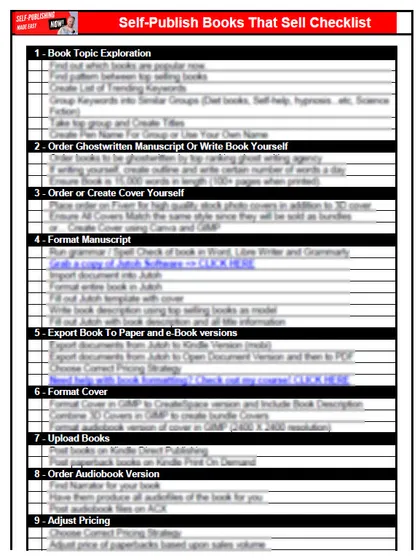
The checklist is the 12 steps I follow for every book I publish, from choosing a topic that already sells to setting up the book's marketing. It is free, and you get it straight away.
You get the free checklist and Chris's emails. Unsubscribe any time. Privacy policy
Not sure yet? Book a free 25-minute call
Newest posts
- IngramSpark Standard vs Premium Color: Which Interior for Your Book?
- Which AI Should You Use to Write and Self-Publish a Book?
- What Can I Do Before My Manuscript Is Finished? Five Jobs to Start Now
- How Should I Title My Book's Chapters?
- Atticus or Reedsy Studio: Which Should You Use to Format Your Book?
Popular guides
- Lulu Self-Publishing Review 2026: Pros, Cons and Costs
- IngramSpark Review 2026: Free Setup, New Fees and Is It Worth It?
- Is Pegasus a Vanity Publisher? (2026 Update)
- Can You Sell Self Published Books On Etsy?
- How To Edit Your Books For Free With Grammarly
- Self Publishing Lulu VS Blurb?
- 5 Best Self Publishing Courses for Beginners (2026)
- How Long Should A Self-Published Book Be
- What Are The Minimum Amount Of Words For Paperback Books?
- Comparing Ingramspark, Lulu, and KDP Print
- How Many Books Do Self Published Authors Sell?
- Self-Publish For Under $199!