


Get the free checklist: the 12 steps I follow for every book I publish.
No, you don’t have to use your real name to publish a book, and you can use a pen name in most cases: KDP allows it, and the US Copyright Office says there is no legal requirement that the author be identified by his or her real name on the application. What you can’t do is hide from the paperwork. Your legal name still goes on your retailer account, your tax form and any contract you sign. This post is the full answer on pen names: whether you may, how copyright and contracts work, what readers see and when a pen name is a bad idea. For the exact KDP fields, see how to use a pen name on Amazon KDP. I’m not a lawyer, so treat this as general information and not legal advice.
Am I allowed to publish under a pen name?
Yes. KDP says “you can use a pen name or pseudonym to publish your titles” and that it should be appropriate and used consistently across your books (KDP help: authors and contributors). Its metadata guidelines add one condition: the name must not mislead buyers (KDP metadata guidelines).
There is nothing dishonest about it. Mark Twain was the pen name of Samuel Clemens, and many famous authors have done the same. Other stores and print distributors have their own account rules, so check each one before you rely on this.
Who owns the copyright when I use a pen name?
You do. Your name on the cover has no effect on who owns the book. In the US, the Copyright Office says “there is no legal requirement that the author be identified by his or her real name on the application form” and that if you file under a fictitious name you check the “Pseudonymous” box (US Copyright Office FAQ).
One thing changes: how long the copyright lasts. For anonymous and pseudonymous works, the Copyright Office says protection lasts “95 years from the year of its first publication” or “120 years from the year of its creation, whichever expires first” (US Copyright Office: duration). For most authors that is plenty. If you want your estate to benefit for longer, ask a copyright lawyer how your own country treats pen names.
Copyright rules differ by country, so outside the US check with your national copyright office.
What about contracts and money?
This is where the legal name comes back. If you sign with a publisher, agent, audiobook producer or distributor, tell them it is a pen name and put both your legal name and your pen name in the agreement. Have a lawyer check the contract, and ask an accountant how the income is reported under your legal name.
The same applies on KDP. It issues your payments and tax forms under the name in your account details, which should be your legal name, and it requires valid taxpayer information from every account holder (KDP account help, KDP tax help). Whatever name is on the book, the person on the account is the one reporting the income.
What do readers and retailers see?
On Amazon, readers see the author name you type in for each book. KDP says your real name “stays anonymous and is not published anywhere on our website” (KDP help). Three places can still show you:
- The book itself. A copyright line, an About the Author page or a photo are public, so decide what goes there.
- The publisher name. An ISBN is tied to a publisher name, which KDP calls the imprint. A free KDP ISBN shows as “Independently published”. If you use your own ISBN, the imprint has to match the ISBN agency’s record (KDP ISBN help). Which registration fields Bowker makes public is a question for Bowker, so ask before you register in your own name.
- Your own website. If you run an author website, check what your country’s rules say it must show about who runs it.
How do I keep a pen name separate from me?
This is my advice, from running more than one name. Use only the pen name on the website and social accounts, and keep a separate email account for it, because mixing them defeats the purpose. Pick one photo style, color scheme and tone and keep them. If you leave out your photo, use a logo, not a stock photo of someone else: a fake face is worse than none. If you do an interview or a book signing, remember to answer to the pen name. It should be you with another name, so you can still be yourself.
Can I write non-fiction under a pen name and still be trusted?
Yes. Readers trust what you show them, not the name on the cover. Write an author bio that says what you have really done, such as the years you worked in the field or the problem you have solved for clients. Don’t claim degrees, titles or results you don’t have. That is the one thing that can hurt you under any name.
Should I use a separate pen name for each genre?
I do, and I recommend it. When I first started self-publishing I used my own name and published in many genres under it. After several books, and after learning from courses, videos and other books on the subject, I saw that this broke the rule I now follow: one pen name for each genre.
Say you write cookbooks, fiction, spirituality and books on sleeping better, all under one name. Readers see someone dabbling here and there, and you don’t get the authority you would get if each name stuck to one kind of book. Someone who puts out 10 to 20 books on one subject becomes known for that subject, and that is what each name should do. It is fine to use your own name for one of them. Pick the genre you want to stick with under that name and don’t keep switching. For the pros and cons of more than one name, read pen names for authors.
Why would anyone use a pen name?
Usually for privacy, separation or competition. Some people don’t want to be linked to the kind of writing they do, or have a message that could undermine other things they do. Others write on the side of a main job and want to keep the two apart. And if competitors know which books are yours, they can leave negative reviews, or pay people to. A pen name makes that harder.
When is a pen name a bad idea?
- When it misleads. Don’t use a name that echoes a famous author, say for a series like Harry Potter, to trick readers into buying. KDP’s rule is that a pen name must not mislead buyers, and readers who feel tricked leave poor reviews. Always deliver what the reader thinks they are getting.
- When your own name is the business. If the book is there to bring you coaching clients, speaking or consulting, your real name on the cover is the point. A pen name only works if you are happy not to get the credit.
- When you have not decided. The primary author field on a published KDP book can’t be changed. You would have to publish a new edition under the new name, so settle the spelling before you hit publish.
- When you can’t keep up with the names. Every name needs its own site, bio and posting. Two or three names you can manage well beat six you neglect.
If you are choosing your genre and your pen names now, my free 12-step self-publishing checklist starts with picking a profitable niche.
Have you tried using pen names, or do you prefer your real name? Tell me why below in the comments.
Listen to this episode on Spotify
Frequently asked questions
Do I need to use my real name to publish a book on KDP?
No. The author name readers see is the one you type in for each book, and KDP says your real name is not published anywhere on its website. Your real name still goes in your account information so KDP can issue payments and tax forms.
Can I change my pen name after I publish?
KDP says you can't change a book's primary author field once it is published. You would have to publish a new edition under the new name, so check the spelling before you hit publish.
How long does copyright last on a pseudonymous book?
The US Copyright Office says 95 years from first publication or 120 years from creation, whichever expires first. Ask a lawyer about your own country.
Can I use my real name for one genre and a pen name for the others?
Yes. It is fine to use your own name for one genre and a pen name for each of the others. Pick the genre you want to stick with under your own name and don't keep switching.
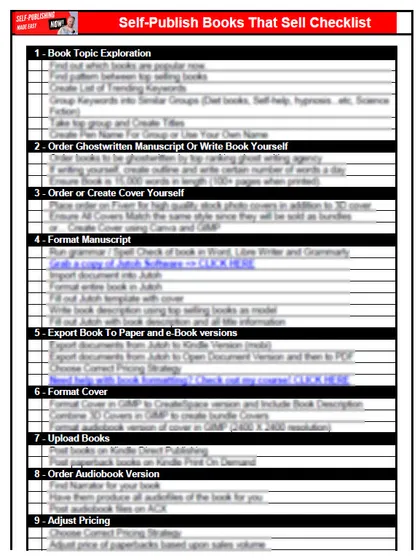
Start with the free checklist
The checklist is the 12 steps I follow for every book I publish, from choosing a topic that already sells to setting up the book's marketing. It is free, and you get it straight away.
You get the free checklist and Chris's emails. Unsubscribe any time. Privacy policy
Not sure yet? Book a free 25-minute call
Newest posts
Popular guides
- Lulu Self-Publishing Review 2026: Pros, Cons and Costs
- IngramSpark Review 2026: Free Setup, New Fees and Is It Worth It?
- Is Pegasus a Vanity Publisher? (2026 Update)
- Can You Sell Self Published Books On Etsy?
- How To Edit Your Books For Free With Grammarly
- Self Publishing Lulu VS Blurb?
- 5 Best Self Publishing Courses for Beginners (2026)
- How Long Should A Self-Published Book Be
- What Are The Minimum Amount Of Words For Paperback Books?
- Comparing Ingramspark, Lulu, and KDP Print
- How Many Books Do Self Published Authors Sell?
- Self-Publish For Under $199!