

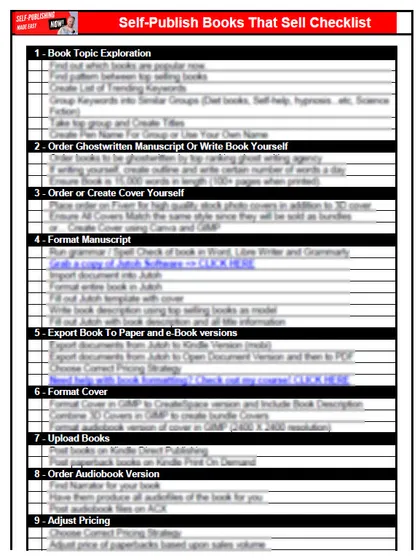
Get the free checklist: the 12 steps I follow for every book I publish.
What I wish I knew before self-publishing is that the niche matters more than the book. My first books did not sell because I published in the wrong genre, and I only found the fix by improving one step at a time and learning from people who had been there. Here is what went wrong, what changed, and what I would do first today.
What happens when you publish in the wrong genre?
It was 2015 and I had a lot of ideas. A friend from high school had put a book on Amazon and was seeing sales. I had heard about the Kindle Gold Rush and thought I might have missed it, but I published my first book anyway. I did everything I thought was right. No sales.
So I published a second and a third book, and even switched genres as I went. One of them became a bestseller for a little while, then dropped off. I started to think it was not possible and that I had missed the boat. I even took a class on trading pesos on the side. I did not believe the method, and it turned out they were guessing.
Then a friend from the Netherlands told me to sign up for a training on Amazon ads that cost about $40. I thought, why would I run ads when I’m not getting sales? Cold traffic could not make it worse. It did make a difference: sales started coming in from the ads.
How do Amazon ads work for books?
Sponsored Products are cost-per-click ads. You set a bid, which is the most you will pay when someone clicks, and a daily budget. There are no monthly or upfront fees (Amazon Ads). KDP authors are listed as eligible advertisers. Ads send readers to your book page, so the page has to be ready first.
Can I start Amazon ads with a small budget?
You set the budget, so yes. Amazon’s Sponsored Products page states no minimum. You choose a daily budget and a maximum bid, you “pay only for clicks,” and the campaign “will never be more than the amount you’ve set” (Amazon Ads). The page also says daily budgets are not paced, so a day’s spend can go quickly. That is why I would start small, watch the first days and add to the budget only when the ads earn more than they cost. The ad should send readers to a book page that is ready.
What did I learn along the way?
I went on to buy more expensive training, and I have watched a lot of videos. Some contradict each other. Some of the people I followed came and went. Some taught strategies that get your account banned, and others are ones I still use today. That is why I check the strategies against Amazon’s own rules, unlike the gurus who push things that break them. See 3 self-publishing scams to watch out for.
Four things came through loud and clear:
- Don’t go it alone. You are not going to guess the right strategies for Amazon. Writing a book and putting it on the market, expecting it to sell, is a mistake.
- There is a steep learning curve, so learn one thing at a time. Move slowly and ask whether what you are doing now is better than yesterday. Add each new strategy to your next book, and to older books when it is simple. Do not pull all your books off the market to redo them.
- Optimize the book first. That starts with being in the right niche, which is defined by the keywords around your book. KDP lets you use up to seven keywords or short phrases that match what readers search for (KDP keywords help). Then the cover, title and subtitle.
- Test profitable niches. I tried this with pen names, each kept to one niche. Some of those books earned a thousand dollars a month each, and that made me a believer. Read can you make money self-publishing and myths about success in self-publishing.
If you are in the right sub-niche, with books that look and feel like the best sellers there, and you run ads and maybe content marketing, you start to see sales. If you are in the wrong niche, you can still sell, but you need to write more books and optimize them better.
I had a session with someone just yesterday on exactly this. Their niche had about 30,000 books in it, so it was hard to compete with the best sellers. We looked at how to optimize their book anyway.
That is why I built a checklist from my 230 books. Every author I coach gets it, and you can grab the free 12-step checklist too. I talk with authors all week, and the problems you face are very close to what they have faced.
Listen to this episode on Spotify
Frequently asked questions
What do Amazon ads cost for a book?
Sponsored Products are cost-per-click ads: you set a bid and a daily budget, and there are no monthly or upfront fees (Amazon Ads). What you spend depends on your bids.
Can I use pen names for different niches?
I did, with each pen name kept to one niche. Check KDP's current rules on contributors and authors before you set one up.
Is there a minimum budget for Amazon ads?
Amazon's Sponsored Products page states no minimum. You set a daily budget and a maximum bid and pay only for clicks, but daily budgets are not paced, so spend can come quickly. I would start small.
Should I take every course and training I see?
No. Many of them contradict each other, and some teach tricks that break Amazon's rules and can get your account banned, as I describe in banned for taking shortcuts.
Start with the free checklist
The checklist is the 12 steps I follow for every book I publish, from choosing a topic that already sells to setting up the book's marketing. It is free, and you get it straight away.
You get the free checklist and Chris's emails. Unsubscribe any time. Privacy policy
Not sure yet? Book a free 25-minute call
Newest posts
- IngramSpark Standard vs Premium Color: Which Interior for Your Book?
- Which AI Should You Use to Write and Self-Publish a Book?
- What Can I Do Before My Manuscript Is Finished? Five Jobs to Start Now
- How Should I Title My Book's Chapters?
- Atticus or Reedsy Studio: Which Should You Use to Format Your Book?
Popular guides
- Lulu Self-Publishing Review 2026: Pros, Cons and Costs
- IngramSpark Review 2026: Free Setup, New Fees and Is It Worth It?
- Is Pegasus a Vanity Publisher? (2026 Update)
- Can You Sell Self Published Books On Etsy?
- How To Edit Your Books For Free With Grammarly
- Self Publishing Lulu VS Blurb?
- 5 Best Self Publishing Courses for Beginners (2026)
- How Long Should A Self-Published Book Be
- What Are The Minimum Amount Of Words For Paperback Books?
- Comparing Ingramspark, Lulu, and KDP Print
- How Many Books Do Self Published Authors Sell?
- Self-Publish For Under $199!