


Get the free checklist: the 12 steps I follow for every book I publish.
Yes, Amazon KDP is worth it, and for most new authors it is the best place to start. Amazon already has the shoppers, the sales page and the payment system. A new author’s own website gets few visitors. If you want to know how many sales it would take to make KDP pay for you, my book sales calculator does the sum. Here is the story of an illustrator who tried her website first.
Why did Emily sell from her own website?
Emily is an illustrator, and a very good one. I have seen her work. She was putting together children’s books about fairies and wanted to sell as many copies as she could and earn a side income. She had heard KDP might not be right for her, and she’d read about people doing well selling from their own sites without sharing the royalties. So she chose her website.
She found problems quickly:
- Formats. A PDF is one thing, but how would she sell a paperback from a website? What about readers on Kobo or Kindle devices?
- Payments. She needed a payment gateway to take cards.
- Records. She needed to track contacts, what people ordered and when, and handle the tax side.
- A sales page. She had to build one.
- Traffic. Why would people who had never heard of her give her their card details?
She posted the question on Quora, where I answer a lot of questions like hers.
What changed when she moved to KDP?
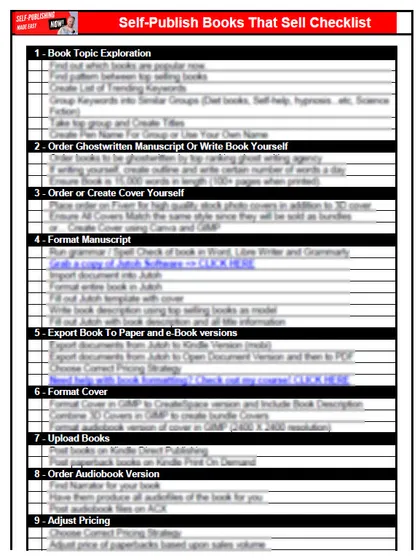
I told her to start with KDP, which takes care of almost all of that. She downloaded my free checklist and saw that she didn’t need to set up a sales page, because Amazon already has one, and that shoppers already have their cards stored with Amazon and trust it.
We went through the formats. I recommend Atticus for formatting. On KDP you need a PDF for the paperback and an EPUB for the Kindle ebook. The old Mobi format is no longer needed, and the EPUB also works on Kobo, Apple and other stores, through services such as Draft2Digital or PublishDrive. The hardcover can use the same PDF on Lulu or IngramSpark, and KDP now prints hardcovers too.
One rule to know: if an ebook is in KDP Select, it can only be distributed through KDP and public libraries for the 90-day period, which would stop her selling it on her website. Print and other formats can be sold elsewhere (KDP Select enrollment). Emily skipped KDP Select so she could sell in both places.
How did she sell from both?
She put the book on Amazon, with the cover she made herself, in paperback and ebook. She also set up her website, which runs on WordPress, and used SendOwl as the payment gateway. I don’t have an affiliate link with them. In 2026 SendOwl made every feature available on every plan, so check its current prices before you choose one (SendOwl, 09-Feb-26). I use ThriveCart, which costs more up front but has no monthly fee, and it makes more sense when your books earn thousands of dollars a month. Setting up the website side takes effort, as my group coaching clients would tell you. It is worth it once sales start.
What happened? She told me her Amazon sales were about 10 times her website sales. Her original reason for avoiding Amazon was not wanting to split the royalty. But KDP pays 70% on an ebook priced from $2.99 to $12.99 on Amazon.com, and outside that band only the 35% option is open (KDP pricing help). She sells hers for $2.99. On her site she may keep nearly all of the price, but if you are not making sales, that doesn’t matter.
It comes down to traffic and conversions. A new author has few people coming to a website. On Amazon, people are searching, and if your title and subtitle have the keywords they use, you get a lot more traffic. That is why KDP is the best route for most. Many authors also charge too little, which I check with my coaching clients.
Is KDP still worth starting in 2026?
Yes, if you treat it as a business with a market to pick and several books to write, not as one book you upload and wait on. The rules are tighter than they were when Emily started, so know them before you begin.
- Slower uploads. KDP now lets you create up to 2 titles per book format each week, counted separately for ebook, paperback and hardcover, and the count resets every Sunday at 12:00 AM UTC (KDP title limits). One author with one book will never notice. It matters only if you plan to publish a lot at once.
- AI disclosure. When you publish a new book, or edit and republish one, KDP asks you to tell it about AI-generated text, images or translations. It defines these as content created by an AI-based tool. Using AI tools to edit, refine or error-check your own work is AI-assisted, and you don’t have to disclose that (KDP content guidelines).
- Royalties. Ebooks priced from $2.99 to $12.99 on Amazon.com earn the 70% option; outside that band only 35% is open (KDP pricing help).
None of these rules stops a new author. What decides whether KDP is worth it for you is the market you pick and how many good books you publish. Both are in my hands more than Amazon’s. Expect it to take time. I can’t promise any author a result, and a single book rarely pays a living wage.
To go deeper, read how to get a book published.
Why is Amazon worth it, and where else should you publish?
Amazon is the largest place for book buyers, who have a credit card on file and a one-click Buy Now button, and KDP lets you self-publish for free. Amazon does not publish its book sales, and estimates of its share vary, so I will not quote a number. Some people avoid Amazon on principle, because they don’t want to feed a monopoly. If your goal is the biggest audience, Amazon wins. See Is Self Publishing On Amazon A Good Idea? for the ethics side.
You lose money if you stay only on Amazon, because other stores and libraries reach readers it does not.
| Platform | What it adds | Notes |
|---|---|---|
| IngramSpark | Wider print distribution | Costs nothing to sign up and upload; US authors can get a free ISBN listing the imprint Indy Pub that only works on IngramSpark, or you can use your own |
| Draft2Digital | Ebooks in many other stores | About 10% of retail price on ebook sales, $20 one-time activation fee; cannot be used for an ebook in KDP Select |
| Lulu | Hardcovers and global distribution | KDP now prints hardcovers in many markets, but Lulu is still an option |
KDP Select asks you to sell the ebook only on Amazon for each 90-day period, so go wide only if the ebook is not in Select. Check each platform’s current fee page before you upload; IngramSpark raised its prices on 1-Feb-26 (Jane Friedman, 10-Dec-25). If Kobo is your first stop outside Amazon, I walk through Kobo self-publishing, and authors outside the US often ask is self-publishing on Amazon UK difficult?
What does Amazon pay on an ebook, and how do you format for every store?
On Amazon.com, KDP’s 70% royalty option covers ebooks priced from $2.99 to $12.99, a band that widened from $2.99 to $9.99 on 7-Jul-26, and delivery costs still apply. The 35% option goes up to $200, and its minimum price depends on file size: $0.99 under 3 MB, $1.99 from 3 MB to under 10 MB, and $2.99 at 10 MB or more. If you enroll in KDP Select, a free 90-day program, the ebook is also in Kindle+ and you are paid from a fund for each page a subscriber reads for the first time (KDP Select, Royalties in Kindle+). For what a book earns overall, see How Much Can You Make Self Publishing On Amazon?
For formatting I recommend Atticus. From one manuscript it exports an EPUB for Kindle and Draft2Digital and print PDFs for paperback and hardcover, according to its co-founder’s review (updated 21-Sep-26).
If you are choosing where to publish your first book, my free 12-step self-publishing checklist gives you every step in order, from picking a niche to publishing.
Listen to this episode on Spotify
Frequently asked questions
Can I sell my ebook on Amazon and on my own website?
Yes, unless the ebook is enrolled in KDP Select. KDP says an enrolled ebook can only be distributed through KDP and public libraries for the 90-day period, but print and other formats can be sold elsewhere (KDP Select enrollment).
What do I need to sell books from my own website?
A payment gateway, a sales page, a way to deliver files, a way to track orders and customers, a plan for tax, and traffic. KDP gives you all of that except the traffic work.
What file formats does KDP need?
I upload a PDF for the paperback and hardcover and an EPUB for the Kindle ebook. The same EPUB works on Kobo, Apple Books and other stores. Atticus exports both.
Start with the free checklist
The checklist is the 12 steps I follow for every book I publish, from choosing a topic that already sells to setting up the book's marketing. It is free, and you get it straight away.
You get the free checklist and Chris's emails. Unsubscribe any time. Privacy policy
Not sure yet? Book a free 25-minute call
Newest posts
Popular guides
- Lulu Self-Publishing Review 2026: Pros, Cons and Costs
- IngramSpark Review 2026: Free Setup, New Fees and Is It Worth It?
- Is Pegasus a Vanity Publisher? (2026 Update)
- Can You Sell Self Published Books On Etsy?
- How To Edit Your Books For Free With Grammarly
- Self Publishing Lulu VS Blurb?
- 5 Best Self Publishing Courses for Beginners (2026)
- How Long Should A Self-Published Book Be
- What Are The Minimum Amount Of Words For Paperback Books?
- Comparing Ingramspark, Lulu, and KDP Print
- How Many Books Do Self Published Authors Sell?
- Self-Publish For Under $199!