

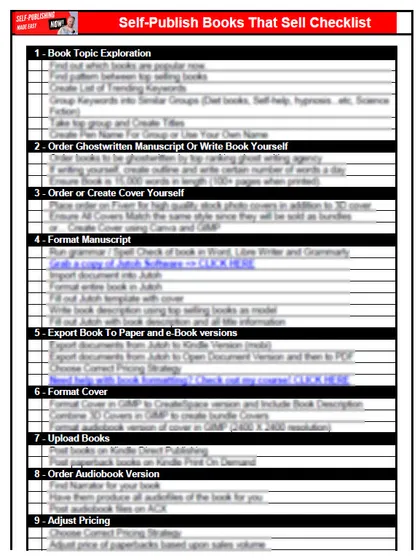
Get the free checklist: the 12 steps I follow for every book I publish.
Table of Contents
- What is self-publishing?
- What are the top 10 benefits of self-publishing?
- 1. Creative control
- 2. Higher royalty rates
- 3. You set your own price
- 4. You face no rejection
- 5. Start building your brand
- 6. You can target your audience
- 7. It is a safe option
- 8. It saves time
- 9. Longer shelf life
- 10. Networking
- What do you give up?
The main benefits of self-publishing are creative control, your own pricing, a bigger share of each sale, no rejection letters, speed, and a book that stays on sale as long as you want. Here are 10 of them, and the trade-off you accept.
What is self-publishing?
When I started self-publishing I had no idea how many benefits there were. If you are writing your first book and wondering whether to go the traditional route or self-publish, this is for you.
A normal publisher takes your book and does several rounds of editing with you. It finds a cover, title and subtitle, decides the genre and categories, works out the pricing and the platforms, and does some marketing, though not much. Self-publishing means you do all of that yourself, or pay people to do it.
What are the top 10 benefits of self-publishing?
Why do all this yourself? Because going the traditional route usually costs you time while they make you wait, and you give up control. Here are the benefits.
1. Creative control
You have complete control over what happens with your book. Nobody tells you that you can’t do this or must change that. You decide the direction, the topic and the length.
2. Higher royalty rates
On Amazon.com, Kindle ebooks priced from $2.99 to $12.99 earn 70% royalty (minus a delivery cost), and the 35% option applies outside that. KDP raised the top of the band from $9.99 on 07-Jul-26 (KDP pricing help). Hardcovers on KDP pay 50% or 60% of the list price depending on the price, minus printing cost (KDP hardcover help). Audiobooks on ACX pay 40% for exclusive distribution under the older model and 50% under the new one that started 26-May-26 (ACX royalties).
Compare that with traditional publishing. The Authors Guild reports that major publishers typically pay 25% of net receipts on ebooks, and it argues that 50% would be fair (Authors Guild, 09-Jul-15). Print royalties from a publisher are lower again, and you also wait for an advance to earn out. Self-publishing lets you keep far more of each sale.
3. You set your own price
You decide what price to charge. On Amazon (the cheapest way to self-publish), keep your Kindle book inside the 70% band to earn the most from each sale. I price paperbacks and hardcovers so I profit at least $5 a book.
Authors often price far too high or too low, and then both the author and Amazon lose. Setting your own price lets you test and adjust.
4. You face no rejection
With traditional publishing you regularly face rejection. Stephen King’s first novel, Carrie, was repeatedly turned down before it was published, and Harry Potter was turned down by 12 publishers before Bloomsbury took it (Self-Publishing.com). Was every earlier version trash? No. Gatekeepers just don’t expect most books to succeed. They look for the few that earn their money back, give the rest a few seconds and move on, often without marketing them.
You don’t face any of that when you publish yourself. Nobody rejects your book unless the content has serious problems. If Amazon rejects it, or the formatting, it tells you what to fix. Without self-publishing, a great book can sit in a drawer.
5. Start building your brand
Many authors I work with think about one book at a time. Think about your name or pen name and the brand it builds. When your name comes up, people should say, “Oh, you’re the one who writes that kind of book.” A personal brand takes time, and self-publishing is how you build it: you put out another book, and another.
Traditional publishers rarely give you that chance. If your first book doesn’t sell, they are less likely to take a chance on the second. Somebody always wins the lottery, but don’t count on being that person. Use a strategy instead. The one I teach is in my free 12-step checklist, including how to drive the traffic that gets your book sold.
6. You can target your audience
With a traditional publisher, they do the targeting, and they are guessing who your audience is. They may push you to write in the direction they think people want. You probably know your ideal reader better than they do. Self-publishing lets you work out who your audience is and write books they will love, book after book. Targeting one market over and over builds your name.
7. It is a safe option
You control everything, so the result is what you plan. With a traditional publisher, a project can be cancelled midway, the publisher can go out of business, or they can position your book in a way you’re not comfortable with. As a self-publisher that is never a problem. (Platforms carry their own risk, as I describe in banned for taking shortcuts.)
8. It saves time
You can publish as fast as you want. There are a lot of steps, but you can hire out many of them. You don’t wait a year or two while a traditional publisher runs multiple rounds of editing. You also choose the quality level. I tell you to shoot for books that earn four and five-star reviews. Two-star and one-star books get you into trouble, because people stop buying.
9. Longer shelf life
When you put your book out, you keep marketing it. I keep driving traffic with the email marketing skills I teach my coaching members. When you put a new book out, readers see the first one and move through all of your books. The more traffic you have, the more you can drive.
With traditional publishing you may get a week or two of push, and then the book goes in the bin with all the others that never made it. That is discouraging for many authors who are just starting. Unless you are one of the lucky winners, and then your book may or may not succeed anyway.
10. Networking
As a self-publisher you have many more chances to join groups of people who are regularly putting out books. They motivate you to put out more. In traditional publishing, once you see how that first book goes, it can be very demotivating, and you can feel isolated.
What do you give up?
You do the work a publisher would do, or you pay for it, and nobody does the marketing for you. If I’ve forgotten a benefit you’ve found, tell me in the comments.
Ready to start? Grab my free 12-step self-publishing checklist.
Frequently asked questions
How much more do self-published authors earn per sale?
Per sale, usually a lot more. KDP pays 70% on ebooks priced $2.99 to $12.99 on Amazon.com (KDP pricing), while major trade publishers typically pay about 25% of net receipts on ebooks (Authors Guild). A traditional deal may sell more copies, so compare what you would earn in total, not only per sale.
Is self-publishing cheaper than traditional publishing?
A traditional publisher pays the costs of editing, cover and printing, while you pay these yourself. Platforms like KDP are free to publish on. See my guide to the cheapest way to self-publish.
Do I need a publisher to get into bookstores?
No. You can reach online stores and libraries yourself through KDP, IngramSpark and Draft2Digital, but stocking in physical stores is never guaranteed. See self-publishing vs traditional publishing.
Start with the free checklist
The checklist is the 12 steps I follow for every book I publish, from choosing a topic that already sells to setting up the book's marketing. It is free, and you get it straight away.
You get the free checklist and Chris's emails. Unsubscribe any time. Privacy policy
Not sure yet? Book a free 25-minute call
Newest posts
- IngramSpark Standard vs Premium Color: Which Interior for Your Book?
- Which AI Should You Use to Write and Self-Publish a Book?
- What Can I Do Before My Manuscript Is Finished? Five Jobs to Start Now
- How Should I Title My Book's Chapters?
- Atticus or Reedsy Studio: Which Should You Use to Format Your Book?
Popular guides
- Lulu Self-Publishing Review 2026: Pros, Cons and Costs
- IngramSpark Review 2026: Free Setup, New Fees and Is It Worth It?
- Is Pegasus a Vanity Publisher? (2026 Update)
- Can You Sell Self Published Books On Etsy?
- How To Edit Your Books For Free With Grammarly
- Self Publishing Lulu VS Blurb?
- 5 Best Self Publishing Courses for Beginners (2026)
- How Long Should A Self-Published Book Be
- What Are The Minimum Amount Of Words For Paperback Books?
- Comparing Ingramspark, Lulu, and KDP Print
- How Many Books Do Self Published Authors Sell?
- Self-Publish For Under $199!