
This post contains affiliate links. If you buy through one, Urgesta AS may earn a commission at no extra cost to you. Read the affiliate disclosure.
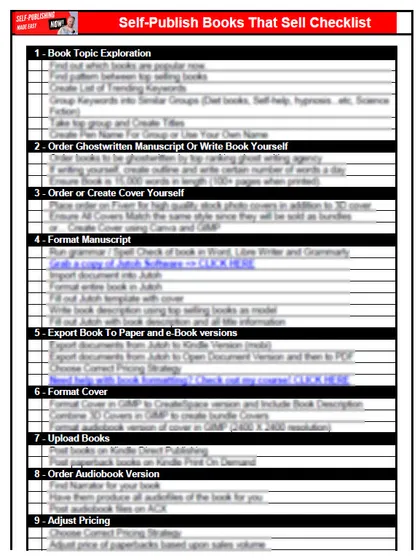
Get the free checklist: the 12 steps I follow for every book I publish.
In 2026, the niches that sell on Amazon are clean romance fiction, biographies of people in the news, and small business and entrepreneurship books. After publishing 230 books on Amazon, IngramSpark, Lulu and a few other platforms, I see the same pattern again and again: the authors who struggle most are not the ones with bad books. They are the ones who wrote into a market that is not there. Below are the three niches, and how to check yours before you write.
Why Does a Niche With No Competition Fail?
A few years ago a client I will call Sarah was getting her book formatted with my help. While she formatted, I looked at the market for her book. I use KDSPY for this (see why KDSpy beats manual searching), and it showed that Amazon had no other books of the type she was about to publish.
Affiliate link: I earn a small commission if you buy, at no cost to you.
That sounds like good news. No competition. It is the opposite. If nobody is selling books on a topic, it usually means nobody is buying them. I told her plainly that she was trying to put a product into a market that does not exist, and that the time and energy of getting the book out would cost her more than it returned.
A market needs both sides, people selling something and people buying it. Puppy training books are a market because people have puppies and want to learn. If you are the only book on a subject, you are not in a market. You are hoping to create one.
Does Every Book Need to Sell?
Not every book has to earn money. I put out family writings regularly and I am working on one right now. It will not sell many copies and I am fine with that, because I know it going in. The same goes for a novel on a topic nobody searches for.
The problem is the author who expects sales from a book like that. Decide which kind of book you are publishing before you spend months on it.
How Do the Three Niches Compare?
Small business books sell soonest, biographies sell fast while the person is in the news, and clean romance is the slow build with the biggest market. Here is how they compare in my experience.
| Niche | How readers find it | How soon it sells | Main risk |
|---|---|---|---|
| Clean romance fiction | Browsing, also-boughts, ads, your email list | Slowly, over years and many books | Needs a series and steady marketing |
| Biographies of living people | Searching the person’s name | Fast, while the person is in the news | Legal risk if you say anything you can’t support |
| Small business and entrepreneurship | Searching for an answer to a problem | Soonest | Crowded sub-niches; pick one with under 1,000 books |
Niche 1: Is Fiction, and Clean Romance in Particular, a Good Niche?
Yes, if you can wait: fiction pays off over years, not weeks. When I open KDSPY and look at the Amazon best seller list, almost all of it is fiction. Inside fiction, most of what I see is romance, and not the steamy kind. It is light-hearted, clean romance with soft pastel covers, and in my checks very few of the standard romance covers make the top hundred. Look for yourself before you decide, because the list changes every hour.
Cozy romance with pastel colours has always been a good niche, and it still is. Fiction is the longer game, though (see fiction or non-fiction, which is more profitable). Readers rarely search fiction by keyword. They might type the kind of story they like, but they will not find your book that way as easily as they find a non-fiction answer to a problem. So you need more marketing, and you need an audience that builds up over years through an email list and a steady run of books.
If you are willing to write book after book in the same area, the volume of romance sales I see on Amazon says this is a profitable place to be.
Niche 2: Do Biographies of Living People Sell?
Yes, if the person is in the news now. Non-fiction gets you sales faster, because a non-fiction book either solves a problem or matches something people type into the search bar. Go to the non-fiction best sellers and you will find biographies near the top.
People do not buy many biographies of dead people. They buy them about people in the news now. A reader types in a name, say Elon Musk or Mark Zuckerberg, and the top results appear, with your book possibly among them. You can also run ads so that your book sits right next to theirs, and if your cover looks like the others in that row you have a decent chance of the click.
One person I came across did this for a presidential campaign. He published a biography of every candidate. Whoever won or lost, readers searched for the names and found one of his books.
Two rules. First, say nothing negative about a living person. Even if you dislike a candidate, an unkind line in a book gives you a chance of being sued, so tell what they did, what they achieved and what they faced, and let the reader decide. If you are unsure about a claim, ask a lawyer before you publish, and see my post on writing about real people for the basics. Second, do not copy a Wikipedia article. KDP does not accept copyrighted content that is freely available online unless the owner provides it (KDP content guidelines), and copied text puts your account at risk. Start from the facts you can find, such as where the person was born and grew up, and write them up in your own words as a full book.
Can I call my biography unofficial and use my own photos?
KDP’s metadata rules say the title may not hold references that suggest a person or entity has contributed to or been involved with your book when they haven’t. The subtitle follows the same rules, contributors are only people who worked on that book, and your cover should match what you enter (KDP Metadata Guidelines). KDP’s guidelines apply to the title, cover and description, and the author is responsible for not violating privacy, publicity or other rights (KDP Content Guidelines). A photo you took is your own work, as a work is under copyright once it is created and fixed (U.S. Copyright Office). Whether you may publish a person’s image is a question for a lawyer, and no KDP page lists it as allowed or banned.
My advice: put the person’s name in the title as the subject, say in the subtitle and description that the book isn’t authorized by them, never list them as a contributor, and keep the cover from looking official. I can’t promise your account is safe.
Will anyone buy a memoir if I’m not famous?
Some readers will, if you can find them. This is my advice, not a rule. A reader who has never heard of you buys a memoir for its theme or its problem, such as growing up in a certain place, living through an illness or leaving a career, and not for the author’s name. So write down who shares that experience, then go to where they already gather. Do not count on posts in author forums to turn into sales. They bring comments more often than readers.
Amazon’s own tools are a route too. KDP lists ads for your ebooks and paperbacks, and a free promotion that makes an ebook free for a limited time (KDP, promote your book). The free promotion runs up to 5 days in each 90-day KDP Select period and earns no royalties while it runs (KDP Free Book Promotions). KDP’s page makes no promise about sales. If your memoir is still a draft, my post on how to self-publish a memoir takes you through the steps.
Niche 3: Do Small Business and Entrepreneurship Books Sell?
Yes, and this is my favourite and the one that sells soonest, with no years of audience building first. Small business, entrepreneurship, solopreneur and work from home books sell a lot of copies, in audio, paperback, Kindle and hardback. I have books in this area and they do well in every one of those formats.
People keep trying to work out how to win at business, and as a writer you are entering that same game. Inside the category there are sub-niches, and inside those there are sub-sub-niches. What you want is a sub-niche with fewer than 1,000 books where a good number of them are selling in the top 100,000 on all of Amazon. That tells you readers are buying and the field is not crowded.
My best book in this style brought in about $1,000 a month. It is under a pen name nobody knows, and it still earned that because the topic was underserved.
Why Does a Very Narrow Niche Lose?
Say I wrote a book on types of toothpicks. Who would buy it? Someone very keen on toothpicks, and that is a sale every couple of years. Now suppose the toothpick market turns out to be big. Skilled marketers will move in and take it from you, because they will beat you on the cover, the keywords and the ads.
Check the market before you write, or before you launch if the book is already done. If the book is finished, we can often angle it toward a market that already exists. That is part of the work in my one-on-one coaching.
If you are still testing your idea, the first step in my free 12-step self-publishing checklist is choosing a profitable niche with keyword research.
Which niche have you found on Amazon that you think is profitable? Tell me in the comments.
Frequently asked questions
What is the best niche for a new self-published author?
Small business and entrepreneurship non-fiction is the one that sells soonest in my experience, because readers search for answers. Fiction, especially clean romance, pays off more slowly through an audience built over years.
How do I check that a niche has buyers?
Search Amazon for books like yours and look at how many sell well. I use KDSpy to see sales estimates and ranks. If almost no similar books sell, the niche probably has no buyers.
Can I write a biography of a living person?
Yes, if you stick to facts you can support and say nothing negative. Do not copy text from Wikipedia or other sites, which KDP does not accept. If you are unsure about a claim, ask a lawyer before you publish.
Start with the free checklist
The checklist is the 12 steps I follow for every book I publish, from choosing a topic that already sells to setting up the book's marketing. It is free, and you get it straight away.
You get the free checklist and Chris's emails. Unsubscribe any time. Privacy policy
Not sure yet? Book a free 25-minute call
Newest posts
- IngramSpark Standard vs Premium Color: Which Interior for Your Book?
- Which AI Should You Use to Write and Self-Publish a Book?
- What Can I Do Before My Manuscript Is Finished? Five Jobs to Start Now
- How Should I Title My Book's Chapters?
- Atticus or Reedsy Studio: Which Should You Use to Format Your Book?
Popular guides
- Lulu Self-Publishing Review 2026: Pros, Cons and Costs
- IngramSpark Review 2026: Free Setup, New Fees and Is It Worth It?
- Is Pegasus a Vanity Publisher? (2026 Update)
- Can You Sell Self Published Books On Etsy?
- How To Edit Your Books For Free With Grammarly
- Self Publishing Lulu VS Blurb?
- 5 Best Self Publishing Courses for Beginners (2026)
- How Long Should A Self-Published Book Be
- What Are The Minimum Amount Of Words For Paperback Books?
- Comparing Ingramspark, Lulu, and KDP Print
- How Many Books Do Self Published Authors Sell?
- Self-Publish For Under $199!