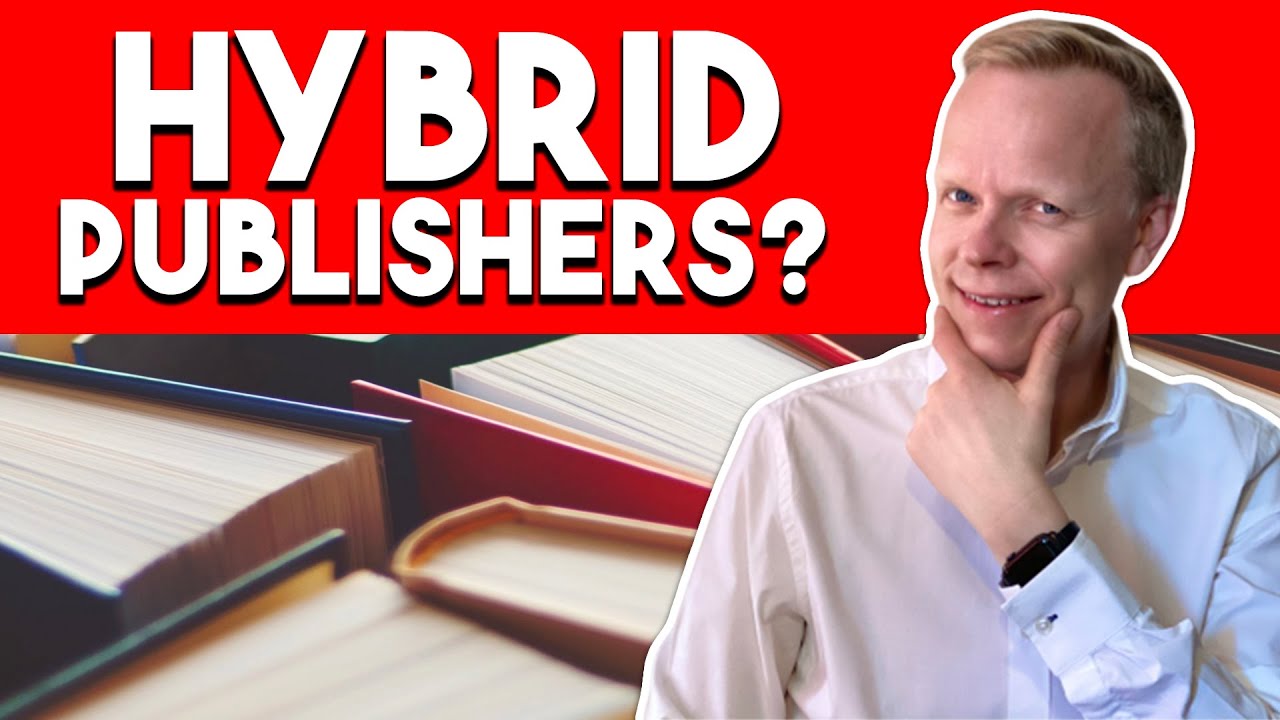
Hybrid publishing is wrong for most authors because you pay thousands of dollars up front and then often lose control of your files, your sales data and your changes. It is not always a scam, and some hybrid publishers are good. I am talking about the bad ones. Here are the three problems I hear about most, and what to check first.
An author I will call Jill, a client of mine, had two side problems. She was trying to get her books back from the hybrid publisher she had used, because she wanted to market them and needed to see her exact sales. The publisher was not interested in giving her that. Readers also complained about the formatting: some images were not centered and the ebook table of contents did not work. When she first went with them it sounded great. You write the manuscript, hand it over, and they put a finished book on the market. That was not what Jill got.
Is every hybrid publisher bad?
No. I got some push-back on YouTube for saying negative things. There are probably plenty of good ones. None of my clients have worked with them and I have not been in contact with them, so I am talking about the bad actors. That is why I do not name names.
What is a hybrid publisher?
In traditional publishing the publisher pays you. In self-publishing you hire freelancers for what you need. Hybrid is a mix: the company sells covers, editing, layout, design and marketing as packages, and you pay thousands of dollars to get the book on the market. It is attractive if you feel you have no technical ability. The Authors Guild, in its guide to hybrid publishing contracts (30-Jul-26), says to confirm a company really is a hybrid publisher and not a self-publishing service by checking it against the IBPA’s Hybrid Publisher Criteria, to check Writer Beware for complaints, and to be very wary of publishers that charge for marketing. If you wonder how publishers find authors, see whether publishing companies scan the Library of Congress to find new authors.
Problem 1: do the upsells never stop?
This is the biggest complaint I hear from clients who tried the hybrid route. You want a small change and it costs another $100. Another change, another $100. You were told it would cost between $1,000 and $10,000 and now they are ready to take more. You thought you would pay once. Then the book comes back and you do not like how it looks, and revisions are not free. Read the fine print before you sign. The Authors Guild also says an author should never have to buy copies of their own work to get a publisher to sign and recommends striking any clause that requires it, and that the author should be able to end the agreement at any time.
Problem 2: do you lose control of your royalties?
Many of these companies do not give you the raw files and publish under their own account. Clients tell me not to worry because they own the rights. I say yes, you own the rights, so show me your sales dashboard. They tell me they do not have it, because the hybrid publisher does.
One client was paid every three months, and when she had not earned much, nothing. If you run ads, you cannot tell which ads lead to sales if you cannot see the sales dashboard. And the pitch was that you would not need a KDP account, which takes about five minutes. Passing reports and royalties on is extra work for them, so they take a share for that too. You can say all day that you own the copyright. But if they control every aspect of the book and keep charging you, what does that give you? If you do choose a hybrid publisher, pick one that gives you the raw files so you can upload them to your own account. That matters more than the rest.
What should you check before you pay?
Find people who say they had a great time with that exact publisher. Not someone halfway through, but someone who has finished a book and is doing a second one with them. A Facebook group is a good place to look. When clients reach me, they have usually gone one round and are unhappy. I ask for the page with the positive things, and it turns out to be the publisher’s own sales page. No client of mine has told me they went through a hybrid publisher several times and were happy. Maybe those people exist. If you are one, tell me in the comments.
Problem 3: will your book need changes?
This is the main reason I think it is the wrong route. Your first book will not stay as it goes out. You will want to build an email list, so you add a lead magnet to the front. When your second book comes out, the end of the first should point to it, and the second should point back. When do you stop editing and reformatting? Almost never. Do you want to pay $100 each time and then explain what you want and get something you did not ask for?
KDP lets you update the description, keywords, categories and price after publishing, and you can update the manuscript and cover too. Your title and primary author name are locked for ebooks, and for paperbacks you can only change them in the first 72 hours after publication, so choose them with care.
What do I suggest instead?
Learn to format your books yourself. I recommend Atticus first. Once you can do it, a book that looks identical to the top bestsellers in your category is within reach. I have not run into a layout problem in my coaching that we could not fix.
If you would rather not do it alone, book a free 25-minute discovery call and tell me where you are.
Before any of this, check that your book is in the right niche. That matters more for sales than most formatting problems. See which niches pay. For more to check, read red flags with hybrid publishing companies, and if you are still deciding, self-publishing: the best option for you.
Have you used a hybrid publisher? What was it like, and what would you ask them before signing? Tell me in the comments.
Frequently asked questions
Why is hybrid publishing wrong for most authors?
You pay thousands of dollars up front and then often lose control of your files, your sales data and your changes. There are probably plenty of good hybrid publishers, and the problems here are with the bad ones.
What is a hybrid publisher?
A mix of traditional and self-publishing: the company sells covers, editing, layout, design and marketing as packages, and you pay thousands of dollars to get the book on the market.
Do hybrid publishers lose you control of your royalties?
Many do not give you the raw files and publish under their own account, so you cannot see your sales dashboard. One client was paid every three months, and nothing when she had not earned much.
What should you check before paying a hybrid publisher?
Find people who say they had a great time with that exact publisher, ideally someone who has finished a book and is doing a second one with them. A Facebook group is a good place to look.
Can you change your book after it is published?
On KDP you can update the description, keywords, categories and price after publishing, and the manuscript and cover too. This matters because a first book changes, for example to add a lead magnet or point to your next book.

Free 25-minute self-publishing call with Chris Baird
Tell me where your book is now. You leave the call with a clear next step for publishing it.
Free, 25 minutes on Zoom, no card needed.
Popular guides
- Lulu Self-Publishing Review 2026: Pros, Cons and Costs
- IngramSpark Review 2026: Free Setup, New Fees and Is It Worth It?
- Is Pegasus a Vanity Publisher? (2026 Update)
- Can You Sell Self Published Books On Etsy?
- How To Edit Your Books For Free With Grammarly
- Self Publishing Lulu VS Blurb?
- 5 Best Self Publishing Courses for Beginners (2026)
- How Long Should A Self-Published Book Be
- What Are The Minimum Amount Of Words For Paperback Books?
- Comparing Ingramspark, Lulu, and KDP Print
- How Many Books Do Self Published Authors Sell?
- Self-Publish For Under $199!